Showing posts with label MS. Show all posts

November 9, 2023

Alexithymia in MS - or what am I feeling, anyway?

 Big word. Confusing to pronounce. SO what is it, exactly? 

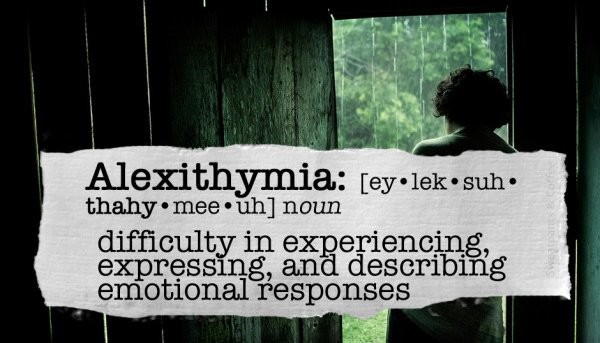
Alexithymia (/əˌlɛksɪˈθaɪmiə/ ə-LEK-sih-THY-mee-ə), also called emotional blindness, is a neuropsychological phenomenon characterized by significant challenges in recognizing, expressing, and describing one's own emotions. It is associated with difficulties in attachment and interpersonal relations.Emotional (Un)awarness - Dealing with Alexithymia

It's common in autism, depression, and brain damage. What does it look like?

- inability to identify or describe emotions; mixing up physical sensations and emotions

- difficulty understanding how others feel

- difficulty understanding social cues

- difficulty with self-assessment and introspection

- limited creativity, imagination, and fantasies

- focus on logical and matter-of-fact thinking

From my readings, it's one of those things that are common in MS, along with failing to accurately read facial emotions. (the "mind in the eyes" test).

This explains a lot of my interactions with life. I frequently feel out of step with social cues. Ask me how I feel and I'll struggle to describe it, which makes writing a bit of a challenge. It also explains my shift from creating stories to editing them.

But where it can wreak the most havoc is in relationships with friends, family, partners. How can you be understood if you don't understand yourself? How can you understand others if you are emotion-blind?

There has been a lot of research lately into this aspect of MS, but these are largely small studies and observational - and they say things like, yes, it's linked - but there's no indication of how to work through it, how to improve your emotional view, how to explain it to your near and dear.

There is some help through the already-overtaxed autism resources, as it and autism are buddies. How do you know if you are dealing with it, especially with lack of self-introspection and ability to describe how you feel? 

Well, as you'd suspect, there are helpful online tests! It's listed as an autism test, but this does not mean you have autism, just that the brain damage caused by MS is altering your responses. I found it revealing, if a bit disconcerting. Why not check it out: 

Toronto Alexithymia Scale

If nothing else, you can take it to your health care provider or show to your family to illustrate what you are dealing with. And in terms of working on things to make relationships better, it's a good place to start. 

We can all do with a bit more self-awareness, right?

Well, at least I can.

June 29, 2018

The uncaring health care system, or why neurologists seem so unsympathetic


I know, I know. We've all heard the stories about neurologists who treat their patients like objects of no interest, who never seem to take your pains and troubles seriously, who are in and out of the clinic room in 2.2 milliseconds.

They seem to be everywhere.

I used to get all hurt by their reaction, too - I'd leave muttering and cross at the world and hating the neuro in particular. Of course, I was going to one of the top neurologists in the country (and he knows it), and was profoundly uninteresting to him as I was still walking and talking.

In my mind I was degrading by the minute. But then, he wasn't evaluating my cognitive abilities or my depression. He was only interested in my walking. Which was something I didn't understand until I looked into MS studies and found that, at that time, that was the only assessment routinely done. (this is changing, thanks to Bart's MS save the hand focus).


But I've been ten years with this disease and I've gained some perspective. And some sympathy for the neurologists. (Not for my one from before - he truly IS an ass, and some are) I've worked with neurologists on projects, I've participated in research, I've made my own panicked calls to the clinic begging for help. What I've discovered is that they are an interesting and interested group of individuals who really do have a dismal job. Most of their patients do not get better.

Brain injuries don't tend to get better. They progress (in MS, Parkinson's, Alzheimer's, Huntington's, etc etc). Doctors (and MS Nurses) are supporting a crumbling wall, catching the biggest falling stones, having to let the smaller ones tumble.

When I was first diagnosed, I must have called my MS nurse a zillion times. I would have a symptom, it would bother me, so I'd call. "My foot is in a spasm and it hurts". "Yes, that happens," she'd say. "I'm completely numb on my right side". "Yes, that happens," she said. "My vision is all blurry!" "Yes..." And on and on.

God bless her, she never said, "Would you please stop bothering me? I have real sick people to talk to!" Because she did. The people who were paralyzed, who couldn't swallow food, who had horrible kidney infections after storing urine for weeks, people who had gone blind with optic neuritis. People who were truly suffering, as vs me, who was being BOTHERED.

Symptoms are awful, painful, exhausting, depressing. I hate it when I can't see properly. I grieve when I can't pee or pee when I shouldn't. I live in total fear of fecal incontinence. I miss being able to feel things.
https://www.mstrust.org.uk/research/research-updates/update130313-longer-lasting-sight-problems-ms-how-common-are-they

But hey, I'm also getting older. Maybe my blurring vision is due to cataracts. Maybe those aches and pains are because I've lazily sitting about instead of exercising.

Or maybe they are signs of my MS progressing. Truth is, there isn't a whole lot that can be done about that bit. Yes, medications - the disease modifying ones - and we should all be taking something like that. Vitamin D - yep. Antispasm drugs. Medical Cannabis. etc. But truth be told, other than the disease modifiers and Vitamin D, nothing will stop this train we're on. Yet.

We can adjust the pillows or ask for a warm blanket, but it's really up to us to try to make ourselves better. Rest, exercise, stretch (whatever parts you can). Eat as well as you can. Avoid salt. Enjoy life as much as possible. Rest. Laugh. Like most chronic diseases, MS is up to us to manage. We have to take responsibility for a lot of it.

And leave the neurologists time to see those who are being consumed by galloping MS, who are dealing with people dangling on the knife blade of serious progression. Leave them time to do research, to find a cure for this dratted thing.

It's terrifying to take responsibility for your "itching swelling brain," and I don't mean to discourage anyone from checking to be sure a flare-up isn't something more serious. Lately I've called when I couldn't pee, and when I lost myself for an hour and felt panicked. (also a pee issue - a urinary tract infection). Both times I got an immediate caring response that dealt with the issue. I don't call when I'm in pain, or tired, or can't read well anymore. With perspective, I know that if I stretch, drink more water, rest, move, this will likely pass, and if not, there probably isn't a solution. (yet) And I whine to my MS support group and they whine to me and we understand each other.

Life sucks. MS sucks more. So does diabetes, arthritis, cancer, etc. We aren't the only ones who deal with stuff on a daily basis. Sometimes we just have to bite the bullet and suffer in silence.

What do you think? Let me know in the comments!

April 19, 2017

Being bipolar with MS


I'm not really bipolar, at least I don't think so, but there's this thing that happens to me sometimes, where I am busy and suddenly my fingers type very fast and I kind of go into a fugue state where I flow through my day without actually being part of it. 


The next day, I am overwhelmed with the blues and a feeling of insignificance and the urge to abandon hope and flee to somewhere, anywhere, where I can be alone with my thoughts.

It's not a good time to read books talking about suicide at those times.

Now that I know that this happens, fairly regularly, I try to ignore it and carry on, knowing that I will be better soon, after a bit of rest and accomplishing some things and yadda yadda.

Yesterday was one of my spin days. I wrote in the morning, volunteered in the afternoon, went to a talk in the evening. I don't believe I was truly present for much of the day, covered over with wax paper mentally, feeling separate from my environment. And then the evening session I went to I couldn't shut up at, despite my telling myself to.

Sounds pretty manic to me. Home and tossing and turning all night (to be fair, my sick cat was to blame for much of that), and now today I am on the edge of tears and just wah wahing to myself.

It happens fairly often, this rapid change. When you feel physically good with MS, you feel as if you are on speed. You can DO things, the fatigue is eased for a moment, you don't feel as if you are going to collapse into a narcoleptic pile at any moment. You can physically sit for a bit and NOT fall asleep. It's a rush.

So off you spring like a bunny rabbit and you do many more things than you are used to in a day and then huzzah, you pay for it with tired neurons and a post accomplishment hangover.
People tell me to pace myself, etc etc, but if I lived my whole life according to my bad days I truly would give up. I have to have hope that something will turn out right, sometime, that the me that is inside can still struggle through the wax paper and interact.

The more I find myself being inappropriate during my up days, though, the more I think I should stay away from people. Which isn't a good thing.

Time, I foresee, to get some help...again...or maybe I am overmedicated....

April 16, 2017

An excellent blog to follow and read


From Bart's Hospital, UK - lots of short posts, all very interesting!

Multiple Sclerosis Research

And who the heck are you? Or frontal lobe dementia and MS


Image result for cortical MS 

I just read an article about the inimitable Terry Jones of Monty Python fame and how he has developed frontal lobe dementia. The symptoms sounded familiar - loss of impulse control, depression, aphasia or dislike of talking, 

"Unlike Alzheimer’s, there is no loss of reasoning or orientation. However, planning, decision making and speech are affected, and patients often seem less caring or concerned about their family and friends." https://www.theguardian.com/society/2017/apr/16/monty-python-terry-jones-learning-to-live-with-dementia

Hmm. I thought. I know I have some frontal lobe lesions. I wonder if there's a link between MS and frontal lobe dementia?

Turns out there is, and not only that but they are suggesting some of the people who appear with just depression or dementia may in fact also have MS. Often there's a long course of depression before the diagnosis of MS is made, but then we all know about how long it takes to be diagnosed unless you become paralyzed or blind suddenly...In any case, it's important to know about this as these people's dementia may be slowed with MS treatments.Here's one of the articles I found: 

Cognitive presentation of Multiple Sclerosis: Evidence for a Cortical Variant

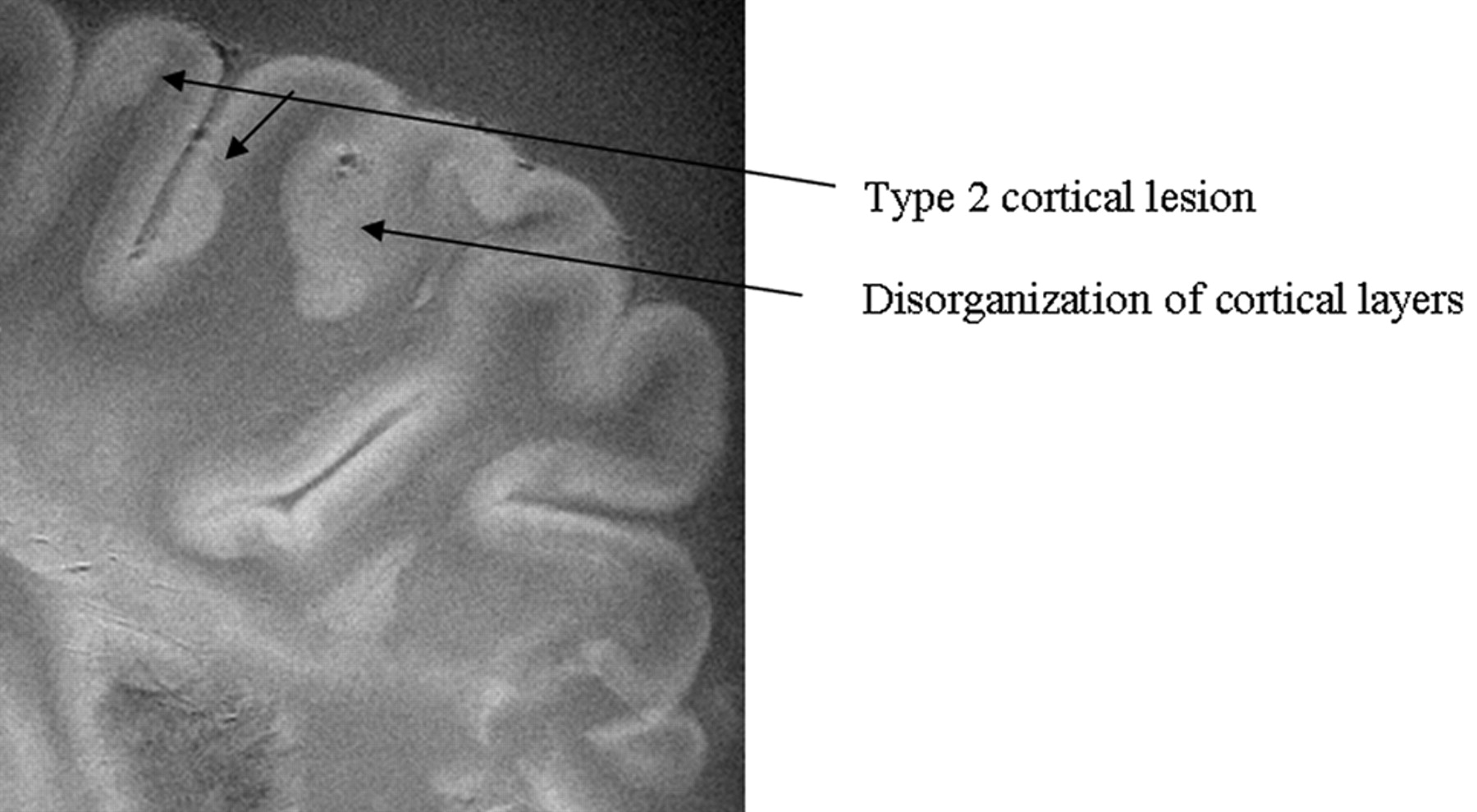
In this study, an argument is made for the cortical variant of MS, one that wouldn't be detected by the old EDSS score, one that shows up purely cognitively until quite a ways down the MS trail and sometimes doesn't show physical effects even then. Cortical MS is difficult to find on MRI as the cortex isn't as springy in the MRI and lesions are harder to spot. Hmm. Mine showed up. How big are they anyway? Eeks.

"Although once considered uncommon or late features, cognitive and neuropsychiatric symptoms are now well recognised as early manifestations of multiple sclerosis.1–5 Estimates vary but Lyon-Caen and colleagues reported that 85% of patients with clinically definite multiple sclerosis of less than two years' duration, and 66% of those with only optic neuritis, showed some form of cognitive impairment.6 Similarly, Swingler and Compston7 reported a prevalence of 40% for neuropsychiatric symptoms and signs in 301 patients with established multiple sclerosis during routine clinical interview. Others have since confirmed this observation and reported that the prevalence of symptoms such as memory deficit or depression and focal cortical syndromes was as high as 60%.3–5 "


So, ho ho, I think. Perhaps it's a good thing I keep saving for that home. I may not need it for motoring around, but I may need it for dementia.

My friend and I were joking about how we can't remember things from one computer screen to another - we see something on one window we want to bring to another and then we forget entirely what it was in the millisecond it takes to change pages. 

I started this blog entry from wanting to work on my book; opened my email, saw the entry about Terry Jones, went hunting through research, wrote this and here it is some hours later and no work done on my book.

It is most frustrating. And most annoying, I opened my computer first of all for something that I still can't remember!

At a recent writer's retreat, one of the faculty told us she keeps a blank pad of paper beside her computer and jots down everything she wants to remember. I've gotta start doing that.

Meanwhile, I simply tell people an adaptation of Spike Milligan's poem, There are Holes in the Sky:

There are holes in my brain 
Where the thoughts flow out
If I seem confused
It's cos they're all about...

Image result for holes in brain

April 15, 2017

Whatever do you mean?


Ah yes. MS and relationships. I'm working on a book about how to liven up your intimate relationships even with MS and the research is mind-blowing. Well, it can be fun, too, but I digress...


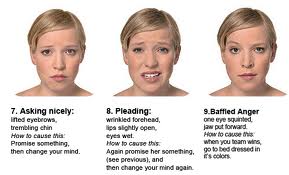
Like, for example - did you know that one of the cognitive changes that comes with MS is the gradually increasing social disorder of not being able to read other's emotions/faces, and not being able to express our own?

“What may be overlooked in relating to and caring for patients with multiple sclerosis is the fact that the neurodegenerative disease sometimes affects a person’s ability to properly convey and perceive emotion. According to the National Multiple Sclerosis Society (NMSS), while there is not enough conclusive evidence to suggest the disease directly affects emotion, it is important to consider that MS patients may either be struggling to cope with the disease, or are physiologically affected by it, making perception and expression beyond their control.
Aside from the loss of the ability to recognize the appropriate emotion behind certain expressions, a new study from the International School of Advanced Studies (Scuola Internazionale Superiore di Studi Avanzati or SISSA) in Italy now suggests MS patients have an increased difficulty interpreting emotions expressed through one’s posture, countenance, and comportment. Additionally, the study suggests these issues are caused by the patient’s inability to identify his or her own emotions, which is a phenomenon termed as alexithymia, and is observed in some MS patients.”⁠1 (Emphasis mine)


1 http://multiplesclerosisnewstoday.com/2014/11/12/inability-to-recognize-and-convey-emotion-an-effect-of-ms/ Accessed Mar 30, 2016

Alexithymia. A new multi-syllabic word to whisper in our partner's ear, late at night.

"I'm so sorry, darling, I didn't realize you were upset. You see, I have alexithymia..."
Related image
I'm so sure that will be the curative word...relationship fixed. "Oh, I see, you can't express or understand expressed emotion. So how SHOULD I reach you? Flash cards?"


Maybe flash cards or one of those "Daily Mood" flipcharts would be a good idea if only to help identify our feelings to ourselves. Because, apparently we can lose that, too.

Definition: Alexithymia

Alexithymia is defined as a personality construct characterized by the sub-clinical inability to identify and describe emotions in the self. The core characteristics of alexithymia are marked dysfunction in emotional awareness, social attachment, and interpersonal relating. Furthermore, individuals suffering from alexithymia also have difficulty in distinguishing and appreciating the emotions of others, which is thought to lead to un-empathic and ineffective emotional responding...
The treatment options for alexithymia are often times very different from typical counseling or talk therapy. For people living with alexithymia, a mental health professional will often concentrate on building a foundation of naming emotions and appreciating a range of feelings. The process will likely include both consideration of the experiences of other people and self-reflection. Even though some people with this emotional comprehension might sound very basic to others, for a person with alexithymia the process of growing their emotional intelligence and capacity may be difficult. Things such as:
  • Group therapy
  • Daily journaling
  • Skill-based therapy
  • Engaging in the creative arts
  • Various relaxation techniques
  • Reading emotional books or stories
  • https://www.disabled-world.com/health/neurology/alexithymia.php, accessed April 2017
Image result for i'm angry with you
Brain injury changes us, no matter how it is caused. The brain injury that comes with MS evolves daily and is still being understood. For the people around us, our emotional winds can blow a bit strongly. And for us, the hurt that we may inadvertently cause adds to our isolation, something all people with chronic disease suffer.

I seriously dislike the word challenge - it seems to mean we can overcome whatever it is. I haven't heard of too many people who overcame brain damage. I think in this case, we could call it a botheration. Annoying, non-fatal, often not big enough to kill us, but certainly big enough to maim some of our closest relationships.

 I suppose it all comes down to communication, understanding, and a fair dose of tolerance. Knowing about it helps. Reading about this was for me a revelation, a light of understanding why I hesitate so much to connect with people, why friendships remain distant, why I can move away from places without a backward glance. My brain doesn't notice the disconnect.

Mind you, I keep hoping I can dig my way out of this particular brain black hole and find a way to care and express my caring. And perhaps, someone like this:

Image result for i'm angry with you

March 28, 2017

Livin' large in a small body


As I near my 60th birthday, I have to admit, I've always been the tiniest bit chicken about things. Travelling, sleeping alone in the dark, being made fun of.

Not that I don't have reasons for all that - I blame the Catholics for my fear of the dark, my small town life for the travelling thing, and being made fun of for being made fun of. At 5' tall on a big hair day, I've been up for my fair amount of abuse. Add smart and nerdy and dressed in what one of my high school friends gently referred to "slightly out of style" clothing, I stood out.

A long haired dark horse standing in snow covered grass with mountains in the backgroundHeck, I've got a scar from playing my clarinet in band. Who gets that?

Anyway, through the mystical bath of being abandoned in my marriage, being moved all over the world, sleeping alone a lot, I've gotten braver. I think. I've lived alone for most of 8 years now, and it's okay. I've moved away from family, and it's okay. I've run for office, and that's okay, too.

In all of these things, I "whistle a happy tune"... and I throw myself in. Pretending not to be afraid does seem to get me past most things.

The MS thing has thrown a bit of a wrench into my plans. See, I can pretend to be brave, only to have my body crap out on me at the moment when I most need it. It is frustrating. I am still at the point of refusing to allow it to be in charge, but I am finding it makes sense to take it into consideration.

So living large is developing smaller parameters. I fall asleep easily, so long solo drives (which I loved) are out. Long solo walks likewise. Legs simply aren't reliable, though I push them as hard as I can. Hanging out late at night in noisy places knocks me out for days. Noise itself is enough to overwhelm my senses. I can't have massages because it overwhelms my body. Too much sensation at once.

But no, I protest! I can't be done yet!!

Image result for iceland

So next week I'm off to ICELAND for the Iceland Writers Retreat that sounds like a pile of two transatlantic flights wrapped around a filling of all sorts of activities, cerebral and physical. I'll even have to be social, attempt to be witty, intelligent, knowledgeable and yet receptive to learning. The whole thing seems like a huge challenge for cognitively-impaired old me. What if I get lost? It's not a completely inappropriate fear - I get lost all the time.

Last week I had a huge anxiety attack about doing this all on my own, but I've met online a bunch of fellow Canadians going to the same event on the same plane so I feel supported a bit. I'm just hoping against hope that my body works with me. I'm telling it, "one more time into the breach, my friend..."

My son says I keep using my MS as an excuse for taking exotic trips. It's true. MS makes me feel like I'm on a merry-go-round, not knowing where I will end up. I may have a long ride, or I may stop on the next round. No one can tell me.

Despite my fear and pending bankruptcy (kidding), I'm off for this trip, hoping I can grab a few of the golden rings as I do. Northern Lights? Icelandic horses? Volcanoes? The most literate society in Europe? Icelanders, such interesting people, living in the middle of the harsh northern ocean. To say nothing of all of the authors I'll meet. Wow.


Meanwhile, my body mutters. It mumbles. It takes a moment now and again to remind me that all is not as it should be.

Ah well, whistle a happy tune, and off I go!


February 6, 2014

Once more into the fray, my friends...

May seems terribly far away, as I sit here gazing out at piles of snow and the deceptive sun that hides a freezing wind. But it's slipping up on us...
I'm doing the MS walk in Halifax again this year - I usually volunteer to help out with registration and then haul my sad legs around the route as well. Hoping I can still do that this year.

In honour of the walk, and of my father, who knew how to make every day something worth living, I herein record the joke he used to tell that always comes up in my head when I think of my draggy legs...

Harry kissed his wife and went out for his usual foursome of golf one sunny Saturday morning. When he returned, many hours later, he looked awful - sweat streaming off of him, brambles in his hair, muscles spasming as he walked.
He came in and crashed in the first chair he came to, begging his wife for a drink of anything, anything.
"My gosh, Harry! What happened to you? You look exhausted!"
"Oh it was terrible," Harry said, mopping his brow.
"It must've been. What happened?"
Harry took a long sip of water from the glass. "Well, everything started out fine, me and the guys, gorgeous day, though a bit hot, if I was going to complain...and we'd just started off. Had to wait for the first tee - busy as hell out there today."
He gulped more water.
"Then, we got to the second hole, and doesn't Ralph just up and have a heart attack right in the middle of the fairway! Dropped dead right in front of us."
"Oh no! How horrible," his wife said.
"I'll say. The rest of the eighteen holes, it was hit the ball, drag Ralph, hit the ball, drag Ralph..."


I'm looking for sponsors for my walk - if you'd like to sponsor me and Ralph, please go to my personal page for the MS Walk.  I'd really appreciate it!


November 9, 2013

"I have MS but it doesn't have me…"

What a load of malarkey.
Every time I hear this or read some cheery news about how wonderful life with MS is, I want to scream. Really loudly.
Except that I can't because I'd like to accomplish something tomorrow and extremes of emotion exhaust my fried nerves.
It's not that I'm not grateful. Honestly. If I had to have a chronic debilitating disease, MS is at least amusing. It changes and wobbles and is completely unpredictable. It makes every morning an exciting trip of "can I feel this" and "can I stand up without falling over?" and "will I need to nap half the day today?" It's exciting.
But it also sucks, absolutely.
I am tired of trying to live normally only to be hit upside the head with a flare-up or a sudden inability to do math or fatigue so intense I can't get myself out to buy milk, let alone do anything else.
I used to be a can-do type of gal, taking things on and throwing them about, accomplishing three things with my right hand while juggling another two with my left. I could multi-task. I could work with music on in the background
Now I find myself typing okay with one hand while the other lolls about and goes on strike or types at a different speed. My brain packs up and wanders off at odd moments and words go walkabout.
Most of the time I'm fine.
But I can't predict it, see. When my brain goes out on me, it's a sudden thing. I become exhausted in a moment, crash and burn.
And so I find myself limiting my activities, withdrawing from things, gradually detaching myself from positions of responsibility, backing off, choosing things that can be cancelled in a heartbeat.
So, I have MS, and yes, it does have me. By the throat.

October 27, 2013

Fighting the fatigue monster

Feeling angry and generally despairing. 
Went to an event this weekend and had to return early thanks to MS exhaustion. Beginning to realize that as time goes on and the fatigue and confusion hasn't lifted, I am likely left with a bit or permanent cog fog and a lot less ability to do things...
It is frustrating and surely one of those losses I'll have to get used to over time. As with the other losses in MS, it just becomes accepting a new normal, but along with that comes the loss of dreams for the future...dreams of travel, publication, probably even a partner.
It's interesting looking down the skinny end of the telescope as my world narrows. Things close in. Friends become so important, especially true ones. Joy becomes more valued, a hearty laugh worth everything.
I've chosen wisely. I made a move to paradise, Nova Scotia. I can be outside in a wildly beautiful spot in moments. I like the people here, and I have made good friends. Health care is great, the climate is perfect, and whenever I need the sea, it's steps away. Music is everywhere, the library is fantastically accommodating, fresh apples arrive every fall...
But I'm still grieving today.
I'll have adjusted by tomorrow. Nothing that a good rest and some PBS mysteries can't solve...and a few fresh fall Macs from our last run down the valley.

January 22, 2013

Impaired social cognition in multiple sclerosis

http://www.ncbi.nlm.nih.gov/pubmed/23315621

Oh goodie.
As if it weren't enough that our bodies turn on us and make us dependent, and our minds lose things and start storing socks in the freezer and ice cream in the hall cupboard, it appears that we lose the ability to interact appropriately with the people around us, often the very people we need to keep us from falling apart.

This study looked at how people with MS responded to a film of four people sitting around a dinner table having a discussion. At various points in the movie, it is stopped and the patient is asked to identify the emotion being expressed by the person at the table.

Apparently we don't do so well at that.
Like autistic people...we seem to lose the ability to read people's faces appropriately, which might account for a few mixed experiences I've had lately.

Of course, this study also gives us an excuse for misunderstanding people. We can just trot out the statement, "Remember - we MSers fail the MASC! You have to tell me what you are thinking!"

Finally, a reason to have real discussions, instead of being expected to read minds.
Huzzah!

December 11, 2012

On the perils of accepting charity

Job accepting charityWilliam Blake

I am in a frumious mood. My own fault. I went to a charity MS event today. Not a fundraiser - a "social" event. One of the Anglican churches here has been holding lunches for people with MS for the past 40 years - an astonishing and kind commitment but ever so slightly weird. 

Why? Because they don't speak to any of the attendees and in fact treat us all as if we are mentally feeble. I had one man practically walk with me to the washroom to ensure I could understand the Men and Women signs appropriately. Argh. 

A church pianist sort played hearty Christmas music on the piano to add context but she played too loudly for anyone to speak with each other, especially MSers with weak voices, sort of like you'd do at a senior's luncheon where everyone is senile or very hard of hearing and sits quietly and drools through the concert. She did a good job but had a different songbook than any of us so we always ended the carols in different places. 

They kindly made food suitable for people without teeth and brought around broken up bits of fruitcake that were passed to us in crumbly small amounts. And they poured us 1/2 cups of coffee so we wouldn't run the risk of spilling it or burning ourselves.

Santa came, and with him a man dressed as an elf, who gave a 15 minute long speech, crying all the way through, about how he loved wearing the elf suit for Christmas Daddies and etc and how "all your happy faces" made it worthwhile. The happy faces got rather stiff during his emotional session, which I guess he does whenever he wears "the suit". He does make a good elf, if a somewhat bipolar one.

We'd taken a ride from friends so we were hopelessly trapped there for the entire event.

There WAS a wonderful man with a fantastic voice who ensured everyone sang Christmas Carols, so that was fun. I suspect he is the parishioner who pushes this thing - they said at the beginning that the usual people didn't want to host it so the men's club did. 

And so all the men stood together over in the corner staring at us while the women toiled in the kitchen, as usual with church things...And everybody brought $5 gifts to share. I was hoping for chocolate but instead got a shiny necklace and two hand towels in pink that said "Love always persists". With bunnies and carrots embroidered on them (not by hand).

All in all it made me CRINGE with horror at the thought of being in a senior's home where I would be pushed out to one of these festive events in a wheelchair and forced to endure and smile through all of this SHIT every few days until Christmas. I swear to god I am taking myself out before that happens, or I'll have to check in with a weapon. Or a few.

God, I pity the poor. It occurred to me that this is what usually happens at charity dinners, where all the good folk, hardworking and with their hearts firmly in the right place, cook food and serve it while watching the poor/old/feeble/sick and hoping they are appropriately grateful. Egad. And for the first time I saw the hell that ongoing disability could be - endlessly going to these things for a "day out" until I perish in the attempt to gulp back another shortbread cookie made with rancid butter. I'd rather get a cash gift and spend it on liquor and sin, with no one watching to see if I choked.

I really don't think I have the intestinal fortitude to be a charity case. How DO they do it?

Exhausted from trying to be nice and failing miserably. 

September 14, 2012

Doin' Drugs - 2

Anyone who has dealt with MS knows it is basically a game of gradually increasing piles of drugs.
Disease-modifying Drugs (DMDs) - which we think do something.
Anti-spasm drugs- which may not help spasms until you are passed out
Drugs to keep your sphincters closed
Anti-depressant drugs: which make you dizzy and confused
Anti-pain drugs: which knock you out
Drugs to counter the effects from the above drugs, which include vertigo, incontinence, weakness, sadness, poverty, etc, etc.

Well, maybe not those last two...

It is always tempting to just toss the drugs away and try to manage the illness without them. A few muscle spasms will teach you to rethink that; the inability to walk will make you grab your DMD needle like a heroin addict and gratefully shoot up in the hope that you can still stagger a little while longer.

And then there's the illegal drug, that always makes me feel like I'm making a pumpkin spice latte or something. The one requiring grinding and special machinery and inhaling. The one that, surprisingly, works, eliminating muscle spasms quickly, without the cheery side effect of me peeing my pants, a freebie with the other antispasmodics.

But I need special permission to have that drug. So I'm starting the effort, with the support of my doc, to get some legal stuff. It's a bit frightening, given that our current government finds it more evil than outright murder. I have to send them passport-type photos, and become officially registered, which I wouldn't have to do if I had a long gun. Odd, no?

Just sayin'


August 29, 2012

Mad Sow, Mad Cow

Some of you blog readers may wonder why I refer to the blog as "Musings of a Mad Sow". No, I don't think of myself as an angry pig, though, honestly, if I gain any more weight...
No, it's all about Denny Crane on Boston Legal. Right before I was diagnosed, I got hooked on the show, particularly enjoying when Denny would say something completely irrational and then gesture to his head and say, "Mad Cow", as if that explained everything.
http://www.youtube.com/watch?v=Zz0H-Py2rjc&feature=related

One of the signs of MS in me was the loss of the barrier between my interior and exterior monologue. You know, that inner voice that says inside your head, "This guy is a jerk", while on the outside you smile sweetly and say all the right things.
I was in management, so my straight talking almost led to me being escorted off the property
It was quite agonizing, really. I'd realize that my mouth and brain had betrayed me and try to retrieve or patch things up, but often it was simply too late. So, since MS had the right initials, I decided to try to redirect my mouth by pointing to my head and saying "Mad Sow".
Oh how I wish it would work.
For the most part, now that I am less stressed and have slept adequately, my mouth is under better control, but it's not anywhere near perfect. I am much more intolerant of foolishness than I used to be formerly and need to remind myself that being part of any bureaucracy is NOT a good plan. And yet somehow I keep ending up being part of them.
And my mad sow keeps putting her little hooflet in.
Like many of us with invisible disease, my physical symptoms are small - except for numbness and an inability to walk further than a block or so. But the mental ones are glaring, at least to me.
I was "gently reared" as they say, and I cringe at being thought rude. My dad didn't raise me that way. But wherever those lesions nestle, they've liberated my tongue and tied up my Miss Manners. Maybe I need to follow that old African tale and dig a hole and yell my true feelings into it. Maybe then the sow would be appeased.
Somehow I doubt it.

July 15, 2012

A Helpful Book

As a youngish and dating woman with MS, one of the things that has filled me with the most despair over the past several years is my loss of sensation in the...ahem...sexual areas. I consulted with my docs, whose recommendation was to place a bag of frozen peas over the...ahem...area in question and that that would help me feel increased sensation.
Well, I dunno about you guys, but frozen anything DOWN there doesn't sound too enchanting for me or the fellah involved. As one friend said, it's like going swimming in the Atlantic Ocean - cold at first, but okay once you're in...
Yikes.
Now, other than developing a jaundiced eye whenever I see a bag of frozen peas in the market, I haven't had much success with that advice. A friend of mine (who works with people with disabilities and their sexual health) and I got to talking. What if we combined the power of her knowledge of everything sexual and battery operated, and my nursing knowledge and the experience of someone living with MS, and we put together a helpful book?
Not a deadly boring one, but a light, useful one, with advice and drawings and some laughter and fun. That. we figured, could be a help to other people like me.
After all, MS is being diagnosed earlier and earlier, and it sounds gruesome to be sentenced to years and years without any idea of how to have a rewarding sex life. We deserve one, no?

But maybe that isn't what's needed. So we thought we'd ask you. In a short little survey, with no chance we can identify you, compiled on machines somewhere in the deep dungeons of the internet, impossible to trace. Well, maybe not completely impossible to trace, but I've got better things to do than find you. There are all those other frozen veggies to experiment with...

Here's the Blurb:

Dorothyanne Brown, a person with MS, nurse, and epidemiologist, and her
writing partner Karen Kalinowski, a Natural Health Consultant and Sex and Kink Awareness Educator, are collaborating to create a resource for people with MS and their partners about sexual intimacy. 

We've created a short survey, ten questions, to get a feeling for what your
needs are as a person with MS or a partner of a person with MS.

The survey is completely anonymous. We have no way to figure out who answers
it, we plan no cross linkage to any database or physician services. 

It will help us create a resource that will be most useful to you. 

Just click on this link and you will be taken to the survey:
http://www.surveymonkey.com/s/LSLN9XN

Please share widely with others with MS or their partners. Help us create a resource that will work for you.
Questions? respond here or email msandintimacy@gmail.com
And thanks!

June 12, 2012

How exciting the brain...

I always was fascinated by the brain. I remember in grade 12 Biology, I dissected a fetal pig. The day I cut into the head I felt such reverence. Already I was totally awed by how well-arranged the body was internally, but the brain, even the fetal pig brain, was so humbling.
It seems oddly appropriate that the disease I got is all about the brain. It would be so boring to have a sore leg or something. Instead I get to wallow is the multiple glories of a magnificent system going awry.
"It is the most mysterious part of the human body, and yet it dominates how we live our adult lives"
TED remix about the brain

May 21, 2012

Goal setting and struggling

I'm heading to Newfoundland this summer. I can't afford it, and probably shouldn't, but I've always wanted to see the glorious island, and I want to go while walking is still possible for me.
It's becoming increasingly evident that walking is slipping away.
My MS seems to have settled in my "spanx" area, neatly encompassing the Monty Python naughty bits, creating numbness and spasms and weaknesses by turns. My hip flexors, while toned, refuse to propel me forward affectively - they pull oddly, knocking my knees off balance and causing knee pain. Right now I can walk less than a kilometre most days.

The boat cruise I want to take to see the fjords of Gros Morne Provincial Park (the one on all the wonderful tourism ads) requires a 3 km walk to reach the boat. I am travelling alone, so getting someone to push me in a wheelchair isn't an option. Instead I'm investigating using my walker, Nordic Poles, canes, etc. And practicing walking in the gym. http://www.bontours.ca/galleries/index.htm

I know I'm strong. Yesterday I carried an over 100 pound exercise bike out of my apartment (with help) and raised it over my shoulders to put it in a truck.

It's just the conversation between my muscles and nerves that lets me down.

So I continue to practice, knowing full well that it may mean nothing in the end, if my nerves shut down.

Back from the gym: managed 15 minutes on the treadmill, 15 on an elliptical ARC trainer, lots of core exercises. It was a good day...today.
Toes crossed it continues.

http://youtu.be/Rqh8Jqu8tIk

May 7, 2012

Exploring - how do I do it?

I'm plotting a trip to Newfoundland this summer, while I can still walk a bit. But even with the "bit" left, I'm wondering how best to get around. I hate my giganto unsexy walker. It looks old-lady-ish and is huge. A three wheeled one is smaller but doesn't come with the welcome seat. Canes are difficult to manage if you want to use your hands. I don't have a scooter.
Went looking on Amazon to see if I could find a sexy all terrain walker. Yep. It's there. Cheaper one costs tons. More expensive one is around the $1000 mark.
This being a crip ain't cheap.
So I'm emailing the people in Nfld and asking them how I can see as much as possible given my limitations. And they are coming through, charming folk that they are. The place where I'm staying near Gros Morne, Entente Cordiale, gave me a whole list of places I could see "just from your car". Others give me hints of activities still open to me.
I suspect I am going to like this place.
I just wish I had the right equipment to get around there.  Any suggestions?

September 17, 2011

Walkies?

A couple of weeks ago I was at the point of grabbing people walking down the street and shaking them by the shoulders and yelling in their faces, "Are you APPRECIATING THIS??? Are you enjoying that feeling of swinging along, not a care in the world, your legs just doing their job without question?"

It was kindof like during my marriage when I'd gone so long without a kiss I used to fantasize about grabbing strange men off the street and begging them to kiss me so I could remember what it felt like. Fantasize, mind.

You see, I was staring at my new rollator straight in the wheels and trying to imagine my life with the bulky but helpful thing and not succeeding. My muscles were twitchy and spasmy and my balance was shot and frankly I was more blue than the brilliant fall sky.
But bless this disease - for the last few days I've been able to walk - without pain, with my legs actually seemingly enjoying the travel.

It's been FABULOUS.

Have I mentioned it's been FABULOUS???

Of course, there are tradeoffs - I still do numbness, the PhD course, but I can move.
Well, sortof. Today, taking romping chutney out for his longer walk, I noticed a nasty twinge or two in my buttock. And the legs were somewhat less enthusiastic than they were yesterday, when I walked a lot and unloaded a truck and stood for several hours. Who could blame me - It was FABULOUS!

It doesn't matter if I slow down again now. At least I know I can still revert to my happy go walky ways. With any luck.
So, Mr. rollator, off to the cupboard with you! I know you're there if I need you, but for today I'm doing the solo thing.

Fabulous!

July 8, 2011

CCSVI and the lure of the "benign"

One of the points CCSVI advocates make is that the treatment is benign, that there are few, if any risks, that it may as well be done as not.
I'm a nurse and I have to tell you the thought of introducing a catheter to any part of my body (but especially the vascular system) fills me with a bit of fear.

I know I'm a chicken. All of my rellies died of cancer (just about) by the time they hit 60.  So the fact that I am on a long term immune system modulator gives me pause, lemme tell you. Every time I inject the copaxone, I think about how a. they are not completely certain how it works, b. it doesn't seem to slow the eventual progress of the disease, just reduce flare-ups and maybe lesions, which everyone agrees don't really predict disease outcomes, c. how since I've been on it, my body doesn't swell up with mosquito bites any more and how weird that is and how there may well be cancer cells sneaking around my body at this VERY MINUTE looking for a good place to lodge and grow, happy and healthy.

I'm on an antidepressant, too - started before my diagnosis, and it's supposed to be doing something for me but again, no one knows what, or whether the depression is caused by the MS or just a reaction to it or to the constant pain, or whatever.  I've withdrawn from antidepressants before and it is some scary stuff, believe you me. They obviously do something altering to your brain and I'd feel a whole lot better if somebody could show me the "insert tab a into slot b" directions for how it worked. But they can't.

Why does the thought of a catheter thingie seem more risky than these steps? Well, I've seen the damage from bad insertion of things (some jokesters might say  - like my kids...- but I love them, so perhaps not..) I know that whenever you put something into your body of the metal or unnatural kind, in places where things are not usually put, you get some damage.  Could be little damage, and worth the risk - such as when you get a screening colonoscopy (which also result in some poor outcomes, however) - given the risk of the alternative. Placing a stent in your heart, for example, is not just one of those things you get done cheerily and wander off to be your regular self.  There is damage caused by the manipulation of tissue that is normally protected.

I've always had troubles with my neck, being a short person with significant stenosis and a lesion or two back in the spinal column. I fear chiropractors manipulating there ever since I heard of strokes caused by neck manipulation. So the thought of a snaky tube going up through those vital spaces fills me with fear.

And yet, the thought of a potential cure for the awful symptoms I live with every day is tempting. Being part of the study that is being done on all those here in Canada who are being followed up for the "treatment" interests me, too - after all, some days I don't feel I am much use except as a medical curiosity.  Every day I take up my arms in battle against MS.  Sometimes it is wearying.

But I've never viewed the procedure as benign.  And of us who have had urinary tract infections after a catheterization know of the risk of introducing illnesses.  Many people coming back from India where they have had medical care end up bringing along a superbug with them, which then spreads throughout our hospitals. And others have other bad results, from spasms to neck problems to this latest report - death by stroke.

This poor woman.  She was basically healthy, had symptoms that were nasty, and the certainty that they would most likely get worse.  But the hope of this "benign" procedure was held out to her  - and she chose it - and she lost, horribly. I know everyone has the choice in this case, but isn't there some responsibility for the medical profession to give the right advice? And maybe she received all the information and decided to continue, I don't know. But if you read the article, some interventional radiologists don't think they should be offering an untested procedure.


Brant-Zawadzki refuses to do the procedure even though people with MS are clamouring for it.
"I do think that physicians themselves believe they're helping these patients, but unconsciously there's an enablement going on of what could become self-harmful, if not a truly self-destructive process."


http://www.cbc.ca/news/health/story/2011/07/08/multiple-sclerosis-ccsvi-death.html

I've met a lot of people with chronic illnesses who do become self-harming with the various treatments they take - before I was diagnosed, I was told I had fibromyalgia.  One of the members of the support group was choking back guafenisin to treat herself based on a protocol someone had created - a dangerous idea, as the side effects are grim. Others are taking opiates for the pain, gradually increasing the doses until they become at risk of falling or doing damage to others.

It sucks having a chronic, incurable disease.  We all want a magic pill.  But we need to be sure it isn't more of a Snow White apple, laced with more poison than benefit.

My deepest sympathies to Maralyn Clarke's family.