December 3, 2023

EndMS Conference: Day 1


After a rainy trip with Via and a somewhat confused wander of the streets of Toronto (dang sense of direction), I was comfortably ensconced in my hotel and headed down to the opening session, this one called H.E.A.R. MS, meant to gather people with MS and researchers together to chat about the lived experience of people with MS and the researchers working to improve it.

The opening panel discussion featured Dr. Dalia Rotstein who told us very exciting things about research into the Epstein-Barr virus and its role in causing MS. Vaccines are in development, and perhaps this will stop new cases of MS as infection with Epstein-Barr is a necessary but not sufficient condition to cause MS. 

She also spoke about research around disability progression, how it is determined (EDSS being seen as far too blunt and outdated at this point). The researchers at our table are working on identifying biomarkers to trace progression which is exciting except I wonder what use it will be in the short term when there are so few solutions to progressive disease. In the future and working backwards from the markers they find, they may come upon a way to act upon the source.

She was very excited about the various therapies that have been developed and are being developed - B cell therapies have been very good at stopping the disease if given early on. There are new things being evaluated that cross the blood brain barrier and they are being tested right now. She also talked about digital devices that could be used to monitor progression, and the need to understand better the 'slow accumulation in the absence of relapses.'

The other speaker was Alexander Bar, a youngish man and parent of two who was felled by progressive MS a couple of years ago and who now needs a wheelchair for transport. He spoke strongly about the need for removal of red tape so we can do more drug trials here in Canada - he's going to Jerusalem for one now (thought not right now) and another in Sydney.

He also spoke about the changes in MS, how you have to evaluate the situation and yourself every day, decide what to tell the neighbours, the family. He's had to change a lot of things, telling us how MS is like playing in a sandbox that keeps getting smaller, "and all the toys are taken away."

Still, he was very positive, reminding us that although we can't control what happens to us, we can control how we respond to the changes. 

And then we all got to chat together with our table and share experiences and discuss progress. We had at our table three people with MS, all of a certain age, all of whom had had very different stories about their disease. In addition, we had two researchers from Memorial University who were looking at biomarkers, and a physiatrist resident who helps run the excellent Neurosask program from Saskatchewan. He said that there are over 300 people who sign on to one of the twice weekly sessions - have you?

All in all an exciting and friendly start to the conference. I'm looking forward to the sessions tomorrow!

November 29, 2023

Music and MS, or feeling anhedonic, anyone?


Apparently there's a term for people who don't like music. They are called "musical anhedonic" - which seems a boring and over explanatory term. Anhedonia means lack of joy or pleasure from life's experiences, and I don't think that accurately represents my feelings about music now.

In this article, Michel Faber tells us that Nabokov didn't like music, writing: 

Vladimir Nabokov reflected: “Music, I regret to say, affects me merely as an arbitrary succes­sion of more or less irritating sounds.”

That's a bit like my experience listening to music. It's an unfunny part of my MS progression that music is often completely overwhelming to me. I find myself avoiding it, which makes me sad. For years I've played instruments, sung in choirs, attended concerts. Wallowed in music over the holiday season.

Now, though, I know to be cautious. Listening to music can completely exhaust me. It makes me cry, setting off my unreliable emotional response. It makes me have an increase in symptoms, spasms, pain. It does something in my irritated brain.

I don't see this much in the MS literature, but perhaps it goes with the general overwhelmingness of much sensory input - it's like my brain acts like a clogged drain, and if there's a whole sink of stuff trying to get in, the pipes back up and eventually the water overflows. I get a similar response in crowds and if too much is going on visually around me. Even touring Cape Breton during one of its spectacular autumn displays of colour can knock me out.

It's another thing that's hard to explain to friends of the non-MS variety. I used to love going to concerts. I can attend, but I pay for this with days of recovery. Nasty recovery.

So annoying.

But I still try. I do adore the sound of a bassoon, or the trill of a piccolo or even a good bass drum line to rock me forward into action. But it's a bit like burning my hand on a stove - I know it is going to hurt me. So I pick my exposures carefully, which makes me seem like a neurotic.

Ah well. I suppose, as with chocolate, I can try small doses and adjust as I respond. Maybe I should try those new earplugs that minimize sound...but then would I hear the heart-soaring crescendos of Beethoven, the arias of Freddy Mercury, the tiny sounds at the start of songs that draw you in? Only way to know is to try, I suppose.

And at least it gives me permission to shut off "All I want for Christmas is You!" with extreme prejudice...


November 9, 2023

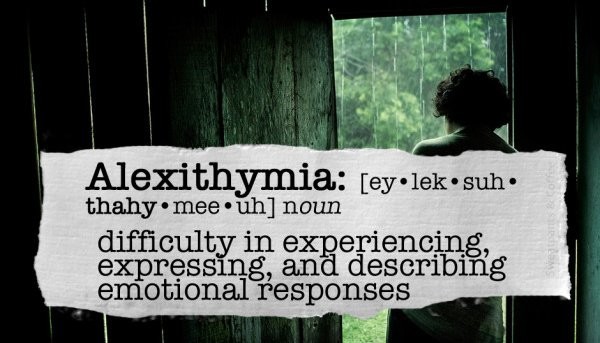
Alexithymia in MS - or what am I feeling, anyway?

 Big word. Confusing to pronounce. SO what is it, exactly? 

Alexithymia (/əˌlɛksɪˈθaɪmiə/ ə-LEK-sih-THY-mee-ə), also called emotional blindness, is a neuropsychological phenomenon characterized by significant challenges in recognizing, expressing, and describing one's own emotions. It is associated with difficulties in attachment and interpersonal relations.Emotional (Un)awarness - Dealing with Alexithymia

It's common in autism, depression, and brain damage. What does it look like?

- inability to identify or describe emotions; mixing up physical sensations and emotions

- difficulty understanding how others feel

- difficulty understanding social cues

- difficulty with self-assessment and introspection

- limited creativity, imagination, and fantasies

- focus on logical and matter-of-fact thinking

From my readings, it's one of those things that are common in MS, along with failing to accurately read facial emotions. (the "mind in the eyes" test).

This explains a lot of my interactions with life. I frequently feel out of step with social cues. Ask me how I feel and I'll struggle to describe it, which makes writing a bit of a challenge. It also explains my shift from creating stories to editing them.

But where it can wreak the most havoc is in relationships with friends, family, partners. How can you be understood if you don't understand yourself? How can you understand others if you are emotion-blind?

There has been a lot of research lately into this aspect of MS, but these are largely small studies and observational - and they say things like, yes, it's linked - but there's no indication of how to work through it, how to improve your emotional view, how to explain it to your near and dear.

There is some help through the already-overtaxed autism resources, as it and autism are buddies. How do you know if you are dealing with it, especially with lack of self-introspection and ability to describe how you feel? 

Well, as you'd suspect, there are helpful online tests! It's listed as an autism test, but this does not mean you have autism, just that the brain damage caused by MS is altering your responses. I found it revealing, if a bit disconcerting. Why not check it out: 

Toronto Alexithymia Scale

If nothing else, you can take it to your health care provider or show to your family to illustrate what you are dealing with. And in terms of working on things to make relationships better, it's a good place to start. 

We can all do with a bit more self-awareness, right?

Well, at least I can.

June 29, 2018

The uncaring health care system, or why neurologists seem so unsympathetic


I know, I know. We've all heard the stories about neurologists who treat their patients like objects of no interest, who never seem to take your pains and troubles seriously, who are in and out of the clinic room in 2.2 milliseconds.

They seem to be everywhere.

I used to get all hurt by their reaction, too - I'd leave muttering and cross at the world and hating the neuro in particular. Of course, I was going to one of the top neurologists in the country (and he knows it), and was profoundly uninteresting to him as I was still walking and talking.

In my mind I was degrading by the minute. But then, he wasn't evaluating my cognitive abilities or my depression. He was only interested in my walking. Which was something I didn't understand until I looked into MS studies and found that, at that time, that was the only assessment routinely done. (this is changing, thanks to Bart's MS save the hand focus).


But I've been ten years with this disease and I've gained some perspective. And some sympathy for the neurologists. (Not for my one from before - he truly IS an ass, and some are) I've worked with neurologists on projects, I've participated in research, I've made my own panicked calls to the clinic begging for help. What I've discovered is that they are an interesting and interested group of individuals who really do have a dismal job. Most of their patients do not get better.

Brain injuries don't tend to get better. They progress (in MS, Parkinson's, Alzheimer's, Huntington's, etc etc). Doctors (and MS Nurses) are supporting a crumbling wall, catching the biggest falling stones, having to let the smaller ones tumble.

When I was first diagnosed, I must have called my MS nurse a zillion times. I would have a symptom, it would bother me, so I'd call. "My foot is in a spasm and it hurts". "Yes, that happens," she'd say. "I'm completely numb on my right side". "Yes, that happens," she said. "My vision is all blurry!" "Yes..." And on and on.

God bless her, she never said, "Would you please stop bothering me? I have real sick people to talk to!" Because she did. The people who were paralyzed, who couldn't swallow food, who had horrible kidney infections after storing urine for weeks, people who had gone blind with optic neuritis. People who were truly suffering, as vs me, who was being BOTHERED.

Symptoms are awful, painful, exhausting, depressing. I hate it when I can't see properly. I grieve when I can't pee or pee when I shouldn't. I live in total fear of fecal incontinence. I miss being able to feel things.
https://www.mstrust.org.uk/research/research-updates/update130313-longer-lasting-sight-problems-ms-how-common-are-they

But hey, I'm also getting older. Maybe my blurring vision is due to cataracts. Maybe those aches and pains are because I've lazily sitting about instead of exercising.

Or maybe they are signs of my MS progressing. Truth is, there isn't a whole lot that can be done about that bit. Yes, medications - the disease modifying ones - and we should all be taking something like that. Vitamin D - yep. Antispasm drugs. Medical Cannabis. etc. But truth be told, other than the disease modifiers and Vitamin D, nothing will stop this train we're on. Yet.

We can adjust the pillows or ask for a warm blanket, but it's really up to us to try to make ourselves better. Rest, exercise, stretch (whatever parts you can). Eat as well as you can. Avoid salt. Enjoy life as much as possible. Rest. Laugh. Like most chronic diseases, MS is up to us to manage. We have to take responsibility for a lot of it.

And leave the neurologists time to see those who are being consumed by galloping MS, who are dealing with people dangling on the knife blade of serious progression. Leave them time to do research, to find a cure for this dratted thing.

It's terrifying to take responsibility for your "itching swelling brain," and I don't mean to discourage anyone from checking to be sure a flare-up isn't something more serious. Lately I've called when I couldn't pee, and when I lost myself for an hour and felt panicked. (also a pee issue - a urinary tract infection). Both times I got an immediate caring response that dealt with the issue. I don't call when I'm in pain, or tired, or can't read well anymore. With perspective, I know that if I stretch, drink more water, rest, move, this will likely pass, and if not, there probably isn't a solution. (yet) And I whine to my MS support group and they whine to me and we understand each other.

Life sucks. MS sucks more. So does diabetes, arthritis, cancer, etc. We aren't the only ones who deal with stuff on a daily basis. Sometimes we just have to bite the bullet and suffer in silence.

What do you think? Let me know in the comments!

July 29, 2017

Sex and disability - yes yes yes!

A lovely series about sex and disability - check it out!

http://www.scarleteen.com/article/sexuality/disabled_sex_yes

An excerpt:

There is nothing wrong with disabled sexuality

Disabled sexuality is very stigmatized in many cultures, and there are a lot of reasons why, some of which start with the belief that disabled people are "innocent" and need to be protected from the big bad world. You may have encountered attitudes suggesting that disabled people who have sex are freaky or weird, and that disabled people only have sex when there's a fetish involved. That's not true — lots of disabled people actually have super mundane sex lives, while others are total kinksters, some of whom are even part of the fetish community, but often their fetishes have nothing to do with disability!
Consensual, joyful sexuality isn't wrong or weird or gross or freaky, even if your body doesn't always do what you want it to do or your brain likes to fight you and even if other people want to desexualize you because of your impairment. The only people who should be ashamed of themselves are the ones who think they can dictate what your sexuality looks like because they make assumptions about you on the basis of how your body and brain function.
In fact, there's also something very right about it. Sometimes adaptations that make sex more accessible, fun, and empowering work to your advantage — like being more conscious about communication and taking advantage of props to get comfortable before you get down for sexytimes.

The site talks about many aspects of sexuality, including masturbation and toys, safety and consent, and especially, cognitive issues and sexual relationships.
It's not specifically about MS, but a lot of the issues could apply. Check it out. It's an easy read, and as far as I can tell, full of good info!

April 29, 2017

Sexual dysfunction, anorgasmia, and missing the boat entirely


You have got to love a disease that gradually takes away all your fun. It's a darn good thing we MSers have a sense of humour, or we'd give up in despair.

So you've lost the pleasure of a long hike in the mountains, or the joy of marshmallowing in hot tubs. You can't even sit long without cramping and you love a good drink but hate the subsequent smell of pee as your bladder misbehaves.

Coffee may be your best friend when at home, and your enemy when out, unless you locate yourself next to a bathroom. Your vision - well, we won't go there as I am terminally depressed about mine.

I used to joke about my fatigue and dating - that I'd go out on a date and be overwhelmed with making conversation, so I'd bring the fellow home, and then I'd be so tired I had to lie down. Somehow the guys ALWAYS got the wrong impression...

But now even that sinful pleasure has left the building. Sex can be exhausting, and overwhelming to sensations. One of my more perceptive dates (god love his furry little hide) noticed that I was in pain after sex if I didn't orgasm. (Note: no one else has ever seemed to notice or care - and of course I am battling exhaustion so don't demand as I should)

But that isn't often easy for we MSers, either. Not only are our sensations all over the place, missing, or twisted, but we don't get to the end point as often as we'd like. I liken it to lighting a firecracker and then having it just burn down, with no explosion. The firecracker is burned out, but still full of unexpended gunpowder, and sparks that fire in places they shouldn't.

Tuppy Owens, founder of the Outsiders Club in the UK, is a proponent of sexual workers being able to help those of us with handicaps in this area. These sex workers are not prostitutes but essentially perform a similar service, spending time in a sexual way with disabled people. Unfortunately, this service is not available in Canada - it's still illegal to purchase these kinds of services, no matter the medical need. I suspect this is because we are still under the conservative thinking that sex is not necessary for survival or health. And/or that disabled people wanting sex is just creepy. I think that is wrong-headed, discriminatory, and hurtful.

I know people who have lost "normal" sensations for whom touching an ear can be thrilling. Other more intimate touches may 'work' after the body is turned on with focus elsewhere.

But what about those who are immobilized, who can't share physical sensations with their partners, who don't know how to please each other in a changed situation?

So that's why I'm working on my book. It's not that I live for sex or are terribly focused on it - it's that I know what it's like to lose a bit of it, and I know how it affects me. So few people with disabilities get touched in any other than a helper way. It's wrong. Touch is important to everyone, disabled or not...and sexual or not.

So I toil away, with my  unhelpful MS brain dragging behind my wishes to get it complete.

In the meantime, I've found a site for people with spinal cord injuries (which we often are - I find it helpful to think of MS as acquired brain damage and spinal cord injury) that provides information about many aspects of intimacy with this condition. Please visit and tell me what you think. Is it enough to be told these things, or do you wish for access to sexual surrogates (not me, I hasten to add) here in Canada? And why is it that all of these sites focus almost exclusively on male erection and ejaculation and so little on women, other than mentioning lubrication? Sheesh. Apparently we are again simple receptacles.

Here it is, from Vancouver, of course, from their spinal cord program: http://scisexualhealth.ca/sexuality-201-sci/

They also have a lovely booklet that talks about devices that can be used for different abilities. Once again, there is a greater focus on aids to men, but the information is adaptable:
Pleasurable: Sexual Device Manual for People with Disabilities
What I like about this one is that it breaks down toys by where you need help (hand strength, positioning, etc) and includes a section on devices that can be applied by caregivers and left in place while you have some privacy...


 'There's nothing you can't do if you set your mind to it. Nothing is impossible." Rick Hansen


Have a look, have fun, and let me know what you think!


April 19, 2017

Being bipolar with MS


I'm not really bipolar, at least I don't think so, but there's this thing that happens to me sometimes, where I am busy and suddenly my fingers type very fast and I kind of go into a fugue state where I flow through my day without actually being part of it. 


The next day, I am overwhelmed with the blues and a feeling of insignificance and the urge to abandon hope and flee to somewhere, anywhere, where I can be alone with my thoughts.

It's not a good time to read books talking about suicide at those times.

Now that I know that this happens, fairly regularly, I try to ignore it and carry on, knowing that I will be better soon, after a bit of rest and accomplishing some things and yadda yadda.

Yesterday was one of my spin days. I wrote in the morning, volunteered in the afternoon, went to a talk in the evening. I don't believe I was truly present for much of the day, covered over with wax paper mentally, feeling separate from my environment. And then the evening session I went to I couldn't shut up at, despite my telling myself to.

Sounds pretty manic to me. Home and tossing and turning all night (to be fair, my sick cat was to blame for much of that), and now today I am on the edge of tears and just wah wahing to myself.

It happens fairly often, this rapid change. When you feel physically good with MS, you feel as if you are on speed. You can DO things, the fatigue is eased for a moment, you don't feel as if you are going to collapse into a narcoleptic pile at any moment. You can physically sit for a bit and NOT fall asleep. It's a rush.

So off you spring like a bunny rabbit and you do many more things than you are used to in a day and then huzzah, you pay for it with tired neurons and a post accomplishment hangover.
People tell me to pace myself, etc etc, but if I lived my whole life according to my bad days I truly would give up. I have to have hope that something will turn out right, sometime, that the me that is inside can still struggle through the wax paper and interact.

The more I find myself being inappropriate during my up days, though, the more I think I should stay away from people. Which isn't a good thing.

Time, I foresee, to get some help...again...or maybe I am overmedicated....

April 16, 2017

An excellent blog to follow and read


From Bart's Hospital, UK - lots of short posts, all very interesting!

Multiple Sclerosis Research

And who the heck are you? Or frontal lobe dementia and MS


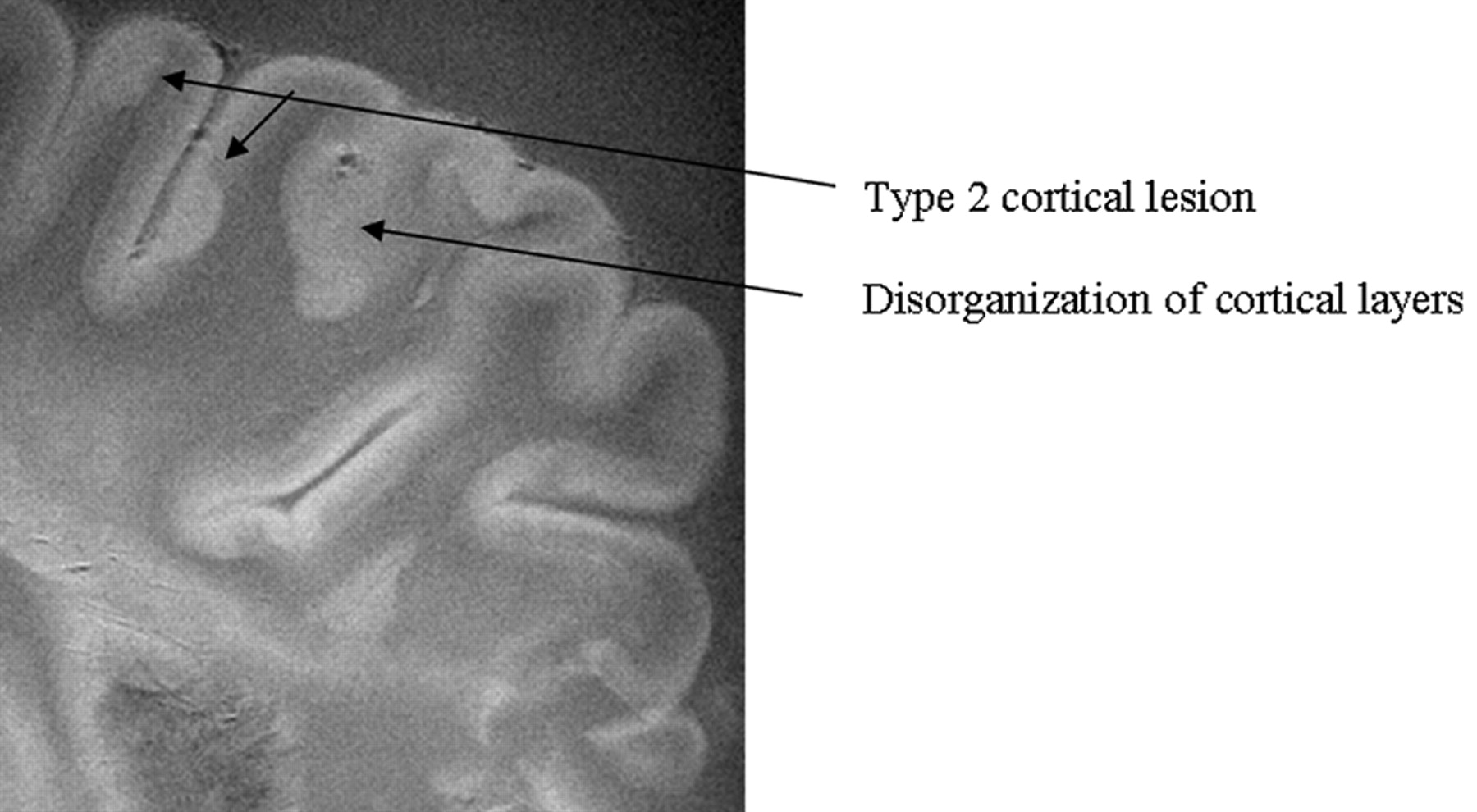
Image result for cortical MS 

I just read an article about the inimitable Terry Jones of Monty Python fame and how he has developed frontal lobe dementia. The symptoms sounded familiar - loss of impulse control, depression, aphasia or dislike of talking, 

"Unlike Alzheimer’s, there is no loss of reasoning or orientation. However, planning, decision making and speech are affected, and patients often seem less caring or concerned about their family and friends." https://www.theguardian.com/society/2017/apr/16/monty-python-terry-jones-learning-to-live-with-dementia

Hmm. I thought. I know I have some frontal lobe lesions. I wonder if there's a link between MS and frontal lobe dementia?

Turns out there is, and not only that but they are suggesting some of the people who appear with just depression or dementia may in fact also have MS. Often there's a long course of depression before the diagnosis of MS is made, but then we all know about how long it takes to be diagnosed unless you become paralyzed or blind suddenly...In any case, it's important to know about this as these people's dementia may be slowed with MS treatments.Here's one of the articles I found: 

Cognitive presentation of Multiple Sclerosis: Evidence for a Cortical Variant

In this study, an argument is made for the cortical variant of MS, one that wouldn't be detected by the old EDSS score, one that shows up purely cognitively until quite a ways down the MS trail and sometimes doesn't show physical effects even then. Cortical MS is difficult to find on MRI as the cortex isn't as springy in the MRI and lesions are harder to spot. Hmm. Mine showed up. How big are they anyway? Eeks.

"Although once considered uncommon or late features, cognitive and neuropsychiatric symptoms are now well recognised as early manifestations of multiple sclerosis.1–5 Estimates vary but Lyon-Caen and colleagues reported that 85% of patients with clinically definite multiple sclerosis of less than two years' duration, and 66% of those with only optic neuritis, showed some form of cognitive impairment.6 Similarly, Swingler and Compston7 reported a prevalence of 40% for neuropsychiatric symptoms and signs in 301 patients with established multiple sclerosis during routine clinical interview. Others have since confirmed this observation and reported that the prevalence of symptoms such as memory deficit or depression and focal cortical syndromes was as high as 60%.3–5 "


So, ho ho, I think. Perhaps it's a good thing I keep saving for that home. I may not need it for motoring around, but I may need it for dementia.

My friend and I were joking about how we can't remember things from one computer screen to another - we see something on one window we want to bring to another and then we forget entirely what it was in the millisecond it takes to change pages. 

I started this blog entry from wanting to work on my book; opened my email, saw the entry about Terry Jones, went hunting through research, wrote this and here it is some hours later and no work done on my book.

It is most frustrating. And most annoying, I opened my computer first of all for something that I still can't remember!

At a recent writer's retreat, one of the faculty told us she keeps a blank pad of paper beside her computer and jots down everything she wants to remember. I've gotta start doing that.

Meanwhile, I simply tell people an adaptation of Spike Milligan's poem, There are Holes in the Sky:

There are holes in my brain 
Where the thoughts flow out
If I seem confused
It's cos they're all about...

Image result for holes in brain

April 15, 2017

Whatever do you mean?


Ah yes. MS and relationships. I'm working on a book about how to liven up your intimate relationships even with MS and the research is mind-blowing. Well, it can be fun, too, but I digress...


Like, for example - did you know that one of the cognitive changes that comes with MS is the gradually increasing social disorder of not being able to read other's emotions/faces, and not being able to express our own?

What may be overlooked in relating to and caring for patients with multiple sclerosis is the fact that the neurodegenerative disease sometimes affects a person’s ability to properly convey and perceive emotion. According to the National Multiple Sclerosis Society (NMSS), while there is not enough conclusive evidence to suggest the disease directly affects emotion, it is important to consider that MS patients may either be struggling to cope with the disease, or are physiologically affected by it, making perception and expression beyond their control.
Aside from the loss of the ability to recognize the appropriate emotion behind certain expressions, a new study from the International School of Advanced Studies (Scuola Internazionale Superiore di Studi Avanzati or SISSA) in Italy now suggests MS patients have an increased difficulty interpreting emotions expressed through one’s posture, countenance, and comportment. Additionally, the study suggests these issues are caused by the patient’s inability to identify his or her own emotions, which is a phenomenon termed as alexithymia, and is observed in some MS patients.”⁠1 (Emphasis mine)


1 http://multiplesclerosisnewstoday.com/2014/11/12/inability-to-recognize-and-convey-emotion-an-effect-of-ms/ Accessed Mar 30, 2016

Alexithymia. A new multi-syllabic word to whisper in our partner's ear, late at night.

"I'm so sorry, darling, I didn't realize you were upset. You see, I have alexithymia..."
Related image
I'm so sure that will be the curative word...relationship fixed. "Oh, I see, you can't express or understand expressed emotion. So how SHOULD I reach you? Flash cards?"


Maybe flash cards or one of those "Daily Mood" flipcharts would be a good idea if only to help identify our feelings to ourselves. Because, apparently we can lose that, too.

Definition: Alexithymia

Alexithymia is defined as a personality construct characterized by the sub-clinical inability to identify and describe emotions in the self. The core characteristics of alexithymia are marked dysfunction in emotional awareness, social attachment, and interpersonal relating. Furthermore, individuals suffering from alexithymia also have difficulty in distinguishing and appreciating the emotions of others, which is thought to lead to un-empathic and ineffective emotional responding...
The treatment options for alexithymia are often times very different from typical counseling or talk therapy. For people living with alexithymia, a mental health professional will often concentrate on building a foundation of naming emotions and appreciating a range of feelings. The process will likely include both consideration of the experiences of other people and self-reflection. Even though some people with this emotional comprehension might sound very basic to others, for a person with alexithymia the process of growing their emotional intelligence and capacity may be difficult. Things such as:
  • Group therapy
  • Daily journaling
  • Skill-based therapy
  • Engaging in the creative arts
  • Various relaxation techniques
  • Reading emotional books or stories
  • https://www.disabled-world.com/health/neurology/alexithymia.php, accessed April 2017
Image result for i'm angry with you
Brain injury changes us, no matter how it is caused. The brain injury that comes with MS evolves daily and is still being understood. For the people around us, our emotional winds can blow a bit strongly. And for us, the hurt that we may inadvertently cause adds to our isolation, something all people with chronic disease suffer.

I seriously dislike the word challenge - it seems to mean we can overcome whatever it is. I haven't heard of too many people who overcame brain damage. I think in this case, we could call it a botheration. Annoying, non-fatal, often not big enough to kill us, but certainly big enough to maim some of our closest relationships.

 I suppose it all comes down to communication, understanding, and a fair dose of tolerance. Knowing about it helps. Reading about this was for me a revelation, a light of understanding why I hesitate so much to connect with people, why friendships remain distant, why I can move away from places without a backward glance. My brain doesn't notice the disconnect.

Mind you, I keep hoping I can dig my way out of this particular brain black hole and find a way to care and express my caring. And perhaps, someone like this:

Image result for i'm angry with you

March 28, 2017

Livin' large in a small body


As I near my 60th birthday, I have to admit, I've always been the tiniest bit chicken about things. Travelling, sleeping alone in the dark, being made fun of.

Not that I don't have reasons for all that - I blame the Catholics for my fear of the dark, my small town life for the travelling thing, and being made fun of for being made fun of. At 5' tall on a big hair day, I've been up for my fair amount of abuse. Add smart and nerdy and dressed in what one of my high school friends gently referred to "slightly out of style" clothing, I stood out.

A long haired dark horse standing in snow covered grass with mountains in the backgroundHeck, I've got a scar from playing my clarinet in band. Who gets that?

Anyway, through the mystical bath of being abandoned in my marriage, being moved all over the world, sleeping alone a lot, I've gotten braver. I think. I've lived alone for most of 8 years now, and it's okay. I've moved away from family, and it's okay. I've run for office, and that's okay, too.

In all of these things, I "whistle a happy tune"... and I throw myself in. Pretending not to be afraid does seem to get me past most things.

The MS thing has thrown a bit of a wrench into my plans. See, I can pretend to be brave, only to have my body crap out on me at the moment when I most need it. It is frustrating. I am still at the point of refusing to allow it to be in charge, but I am finding it makes sense to take it into consideration.

So living large is developing smaller parameters. I fall asleep easily, so long solo drives (which I loved) are out. Long solo walks likewise. Legs simply aren't reliable, though I push them as hard as I can. Hanging out late at night in noisy places knocks me out for days. Noise itself is enough to overwhelm my senses. I can't have massages because it overwhelms my body. Too much sensation at once.

But no, I protest! I can't be done yet!!

Image result for iceland

So next week I'm off to ICELAND for the Iceland Writers Retreat that sounds like a pile of two transatlantic flights wrapped around a filling of all sorts of activities, cerebral and physical. I'll even have to be social, attempt to be witty, intelligent, knowledgeable and yet receptive to learning. The whole thing seems like a huge challenge for cognitively-impaired old me. What if I get lost? It's not a completely inappropriate fear - I get lost all the time.

Last week I had a huge anxiety attack about doing this all on my own, but I've met online a bunch of fellow Canadians going to the same event on the same plane so I feel supported a bit. I'm just hoping against hope that my body works with me. I'm telling it, "one more time into the breach, my friend..."

My son says I keep using my MS as an excuse for taking exotic trips. It's true. MS makes me feel like I'm on a merry-go-round, not knowing where I will end up. I may have a long ride, or I may stop on the next round. No one can tell me.

Despite my fear and pending bankruptcy (kidding), I'm off for this trip, hoping I can grab a few of the golden rings as I do. Northern Lights? Icelandic horses? Volcanoes? The most literate society in Europe? Icelanders, such interesting people, living in the middle of the harsh northern ocean. To say nothing of all of the authors I'll meet. Wow.


Meanwhile, my body mutters. It mumbles. It takes a moment now and again to remind me that all is not as it should be.

Ah well, whistle a happy tune, and off I go!


May 14, 2016

So, how does it feel for those of you who have to deal with a partner with MS?

I'm hard at work on a book about MS and intimate relationships. It's been an interesting process.
I've been to our excellent local sex shop, Venus Envy Halifax, and interviewed the funny, smart and wonderful Kayleigh Trace, who provides sex education through the shop and advocacy everywhere.
I've wandered the aisles of hardware stores, looking for things shy men could pick up to spice up their sex lives. I've done the same at Dollar stores and pet stores, I've cruised so many websites, looking at furniture and various equipment and ideas and such.

I have to say I have NOT gone to porn sites. I personally find porn boring and degrading, so I asked someone else to do that research for me. He's got a background in that stuff, so can judge better. I always find myself wincing or giggling.

I've read every sex and intimacy related book in the Halifax Library system. There are a lot. My favourite is A Tired Woman's Guide to Passionate Sex, by Laurie Mintz, because even the title sounds right.

I've done the same with MS related books. Fewer of them, and more focused on things like taking meds to control pee, or helpful advice like "Talk to your partner". Oh, and full of grim info on what can happen with MS and such as it progresses. Not cheery reading for me.

I even started a survey on Survey monkey about what people wanted to know, about challenges they had, etc. Belatedly, I added a second survey for partners, because I want to know what they want, too. Being as how good relationships often require partners....

But I need more responses. I've had over 100 responses to the MS-ers survey, and I would love to have more to the partner's half. Could I ask you to circulate this to your contacts and partners?

Partner survey

Oh, and another question - regarding illustrations. I don't have the budget to hire actors to pose in sexual positions for me, and trust me you don't want me in the book, so I was going to either use:

a. Wooden dolls
b. Needle felted dolls

to show positioning. What do you think? All comments welcome.
Here's one of my needle felted dolls (dressed) for perspective:


May 10, 2016

So, if you're crazy, how do you know?

Just came from a very non-rewarding visit to my MD. I battle depression as a part of my MS and it is really screwing with my good time lately. Could it be the fresh lesions on my brain despite my DMT? Or various family issues? Or my being financially tight and chubby and getting older? Or maybe the visit with my neurologist where he told me that yes, I was actually having new symptoms that affect my hands (AAUGH!) and eyes (DOUBLE AAUGH!)? Serious enough that he ordered a repeat MRI for me and I only had one six months ago. (unusual here in the hinterland). Who knows?

Or maybe my MS is just attacking my emotional centre as well. It'll do that.

Anyway, my doc is of course asking me what my problem is. "Don't you feel you have value?"

Um, not if I'm not contributing, no.

"So are you saying people in wheelchairs don't have value?"

Of course not. They all have their own value. It is MINE that isn't there....

It's nonsensical, but then those are the blinders depression puts on a gal. I can't even argue it anymore. My therapist is trying to convince me I have value in just existing, but hell, I'm not buying it. Funny thing is, I know others who just exist and I love them dearly and never ever think they should go tumble off this field of tears, but me, yep, the thought of not being here to deal with it all again and again and again is tempting.

See, it's all cyclical, and I don't even have periods anymore. I sink down into depression, I wallow, something jolts my battery (usually something/someone new) and I rumble to life again, but the battery light is still flashing on and off in a warning sort of way. I don't think I've ever had it go out completely since I was diagnosed, and I am getting SO TIRED OF MYSELF.

Fortunately, I only live with a cat, so the damage I inflict with my depression on others is necessarily limited to a few guilt-inducing emails now and then. My cat is an older fellow, declawed and neutered, so he can identify with my anomie. For a while he lived with my birds and was told not to pounce them. He's happier now that he has my permission to eat any moving small creature we come across, especially spiders.

I know exercise, music, sex, good food, cheese, and girly drinks all help. But when I'm depressed, I can't make myself reach for those things. I simply wallow. Surprisingly, the other day, I actually cried. Haven't done that in years.

Hate crying as I go all blotchy and red when I do and I develop a terrible headache. So then I feel awful about crying, which isn't helpful on the whole depression thing.

In any case, a lot of this is probably due to a MS flare-up so I know if I wait it out or do something, it will eventually pass. It's good to know that.

For any of you in my same mess, there's a pretty good book online about ms and depression 
symptoms, written by the same author who wrote "MS and your Feelings". Check them out, and get yourself some support. The one thing I've learned through all this is that it's your friends (and pets)who will see you through. Don't bother counting on family.


March 31, 2015

Oh the sweet sweet aching disappointment of MS

I had my arthritic knees replaced in December - both of them at the same time - to help me cope with the inevitable MS flare up post-op.
I didn't go through a slump, really, denied it totally. Put myself through physio and lots of exercises and trained myself to go up and downstairs despite the warnings from my legs that all was not nice in there. Foot spasms, calf spasms, aches in my thighs, rock hard muscles.
So, now, three months later, I fully expected to be fine. I worked so hard on my recovery, I foolishly thought that my MS would cooperate with me, help me along. I am walking straighter, faster, longer. But all is not well.
Instead my MS is thrashing me through pain and spasms every night, non-dependent on my activity level.
If one more person tells me I need to pace myself I will go mad. I've lived with this disease for ten years or more and have learned how to pace myself. I can't bear much more advice to "rest", "you're doing too much" etc.
With this disease, it is so easy to simply stop. I fight this every day. It's not good for me in any way to stop. It's better to do something.
But it is heartbreaking to think you are making progress (as with my knee replacements) only to realize you remain in the same place in the end...
Sigh.
Must go stretch...

February 25, 2015

Office spoons


There's a cute little analogy that goes around about how to pace yourself with MS. It for some reason equates your energy to spoons - every day you start off with the same number of spoons, and you use them up throughout the day - getting dressed is a spoon, making breakfast is a spoon, going to get groceries is five spoons, and so on. Once the spoons are gone, you have to wait til they come back.

So if you plan ahead, you can have your cake and eat it to, so to speak. You just make sure there are enough spoons left to do what you want in the day.

Aha. One problem. With MS, our drawerful of spoons is like the drawer of spoons in the office. You know, the one that one day can barely close because of all the spoons, and the next day has only one bent one in the corner, and for some reason, a pickle fork.

With MS, there's a secret someone taking away and adding spoons. So, though we may think we can do this and that when we wake up, we may go to the drawer and find our expectations have to dramatically change. We have to adapt, every day, to what we find in that drawer.

It's hard to explain this to people without MS (PWOMS). But most people understand about those office spoons.

November 28, 2014

Oh Goodie!

Less than a week to my bilateral total knee replacement and I'm reviewing the inter webs about information...
And I see this one...apparently my sex life will get better post-op. Hmm. Now I just need a partner...;-)

http://tarlowknee.com/category/total-knee-replacement/page/4/

Dr. Tarlow comments:  Common knowledge says successful joint replacement surgery improves life function and patient well being.  Less often addressed but of importance to patients is the effect joint replacement has on sexual intimacy.  Fortunately, good news is seen in this aspect of patient life after orthopedic surgical intervention.  Read on.
From the Daily Mail -U.K.

From  a report from  Rathod P, Deshmukh A, Ranawat A, Rodriguez J presented  at the 2013 Annual Meeting of the American Academy of Orthopaedic Surgeons (AAOS).


 Painful osteoarthritis of the hip or knee can reduce mobility and make normal activities like walking, exercising and yes, even sexual intimacy, a challenge.  New research evaluating the influence of total hip and total knee replacement on the physical and psychological aspects of sexuality found a majority of patients experienced reduced function before surgery. Fortunately, significant improvements were reported after total hip or total knee replacement surgery. 
Before surgery, 147 patients answered questionnaires for the study. Of them, 67% reported physical problems with sexual activity such as pain and stiffness, and a whopping 91% reported experiencing psychological issues, related to sexual self-image and general well- being.
Post-surgery, 116 participants responded to questionnaires and reported significant improvements in both physical and psychological issues impacting their sexual function. Ninety percent (90%) of patients reported improved overall sexual function after total hip or total knee replacement, with total hip replacement patients experiencing a higher rate of improvement.
The post-operative improvements reported were:
  • Improvement in general well-being: 84%
  • improved sexual self-image: 55%
  • improvement in libido: 42%
  • increased intercourse frequency: 41%
  • increased intercourse duration: 36%
People considering total knee or total hip replacement surgery should talk to their surgeons about their current level of activity, and what they can expect for their post-surgery return to activity – in and out of the bedroom.

November 20, 2014

Our blissful socialized medical care...

For the longest time, I've been a ranting promoter of the Canadian system of health care. My experience had always been that when you were sick, you got care. When you weren't that bad, you waited, but eventually you got good, mostly free care.

Cases in point - when my kids wheezed with asthma, they were seen immediately. When my son's ear got ripped in rugby, care was quick and caring. When I lost my sight at the start of a MS flare-up, I was totally mothered. And now that they've found that my knees are destroyed, I'm in relatively quickly to get them fixed. Things still seem to be flowing as they should.

But I'm seeing the changes as I get ready for this knee surgery. Patients are grouped together in rooms now without concern for gender. The hospitals are running at too high a capacity for such niceties as unisex rooms.

I'm asked to bring all my drugs in with me. Presumably they will simply give me my own drugs rather than ordering them for my time in hospital from the pharmacy. I will be bringing in everything I need for my stay, including clothing and whatever.

There are signs everywhere telling me that as a patient, I have the right to ask people to wash their hands before touching me. I find this sad, as it speaks of nurses and docs running flat out and exhausted.

There's no guarantee of in-hospital rehab follow-up care - I will likely get physio twice a week - in the community - if that. Home care nurses are scarce as hen's teeth, and my bed is going to be barely cooled before they fill it again. My son has experiences of "warm bedding" it on the navy ships - I didn't realize this was the case in hospitals now...

Ah, I remember the good old days, when I had the time to rub a patient's back before bed and make them all nice and cozy. Now I'm going to be managing my own pain meds, up and about before my legs figure out they've been traumatized,

I don't think this is necessarily a bad thing. And I foolishly have confidence that if I need services, the system will step up and meet that need, as well as it can. But I'm expecting a Chevvy service, not a Cadillac one.

Mind you, I've never liked Cadillacs. Nah, I lie. I like luxury as much as anyone. But I am still in the category of preferring to have everyone receive care according to need, not according to ability to pay. So I'm not complaining. Um, yet....

Let's hope my wild knee ride meets my needs... (note: photo below is not of my hospital)


Stages of change...

You know, I just get used to this MS thing when my body throws me another curveball. For the past several years I thought my major difficulty walking was caused by my MS. Nope. Knees crusty with arthritis. 
So oh well, I thought. Let's change them up. Get fresh knew ones. Seemed reasonable.
And then I met my excellent and caring anesthesiologist, who described for me what I could be given  to perhaps help me with the expected excruciating pain.

Excruciating pain.

Yep. According to him, knee surgery is probably one of the very worst surgery one could have, and the MS gave him pause about how my pain could be controlled, given the nerve confusion and conduction problems.

I think he was trying to talk me out of having them both done at once. Instead he made me more convinced I needed to get it over with as the thought of going through this twice sounded horrific.

For pain relief' according to plan:
- advance Baclofen to reduce spasms, increase dose significantly for the first few days.
- advance acetaminophen, antiinflammatories, and morphine
- two nerve block shots in the back of my knees
- two ongoing drip nerve blocks for the front of my knees - down low so as not to affect the motor nerves but to cover the sensory ones. My legs are all of 24 inches long in entirety. Given the need for a long incision for the surgery itself, I figure these will end up somewhere near my groin.
- patient controlled analgesia for general pain.

And that's just for the first 48 hours. I'm thinking I should do a liver purge now just to get my cells working.

Plus I'm thinking he wasn't kidding about the pain. 

It's a bit panic inducing, though the doc was so caring and sweet. As is my surgeon. They must see something in my face because they look at me and say, intently, "we'll take good care of you."

It is amazing how much a kind look, a hand on the shoulder, a voice of concern and a gentle explanation go towards easing my fears.

Two weeks from today...new knees...excruciating pain. Ooooh.

 I am taking my aching knees for a walk today to keep them toned.and doing my knee exercises like a mad thing.

And hoping the MS induced numbness hangs around for the next several weeks...

November 12, 2014

Kneeless in Nova Scotia

I'm in a state.
Of what, I'm not sure.
In a little more than 3 weeks, I'm off to have both knees replaced, at the same time.
To say I am gradually becoming awash with anxiety would be true. To say I am dreading pain would be fair, too. To say I am wondering how this will affect my MS would be right on the money.

I've survived surgery before - each time I had a C-section I was up and about quickly and healed up well. I had a baby to look after, too. In one case, three kids to look after. And somehow I managed it, largely thanks to the helpful intervention of my wonderful mother-in-law, who tended to everything while I healed. (true, sometimes she tended too well - I don't ever remember finishing a cup of tea, but at least I had the first inch or so before the cup was washed)

This time, I am even more fortunate. I have a circle of friends who are willing to help out, two grown sons who are pitching in, lovely things, a new apartment designed for such things.

I also have a spine that is damaged by MS, an epidural space that didn't work on my last delivery because there was some damage there, according to the anesthesiologist, and yes, spasmy legs and arms and bum muscles and general bodily pain from this disease that can only get worse with aggravation.

I've read a couple of studies on people with MS having knee replacements. They weren't encouraging. One small study reported acute hamstring spasms that required further surgery. Another reported over-mobility of the knee joint - which made the surgery a failure.

Three people, total. Anecdotal. Not significant. Enough to create a mini-cloud of worry.

Like my friend Tim, who watches airplane crashes endlessly before flying, I've been glued to graphic surgery videos of knee replacement. I can feel my legs being sawed and hammered. It looks positively brutal.

I panic, exercise the joints as they've taught me. Should lose weight but feel the urge for chocolate so strongly as my anxiety rises. So I bend my knees and do exercises as I chomp down milk chocolate. And sip single malt. I'm trying to be smart but parts of my brain have their own ideas.

So why do it? Well, I can't walk without pain. This could give me walking back. I thought the pain was due to MS until I saw my X-rays. My knees are crunchy. With replacement, I COULD get another several years of walking back, dealing only with the MS.

With better knees, I can exercise more. This is good for all sorts of reasons. General health, anxiety, weight management, control of MS.

So wish me luck. I'm taking a literal leap of faith here. With any luck, I'll soon be able to leap better.