April 16, 2017

And who the heck are you? Or frontal lobe dementia and MS


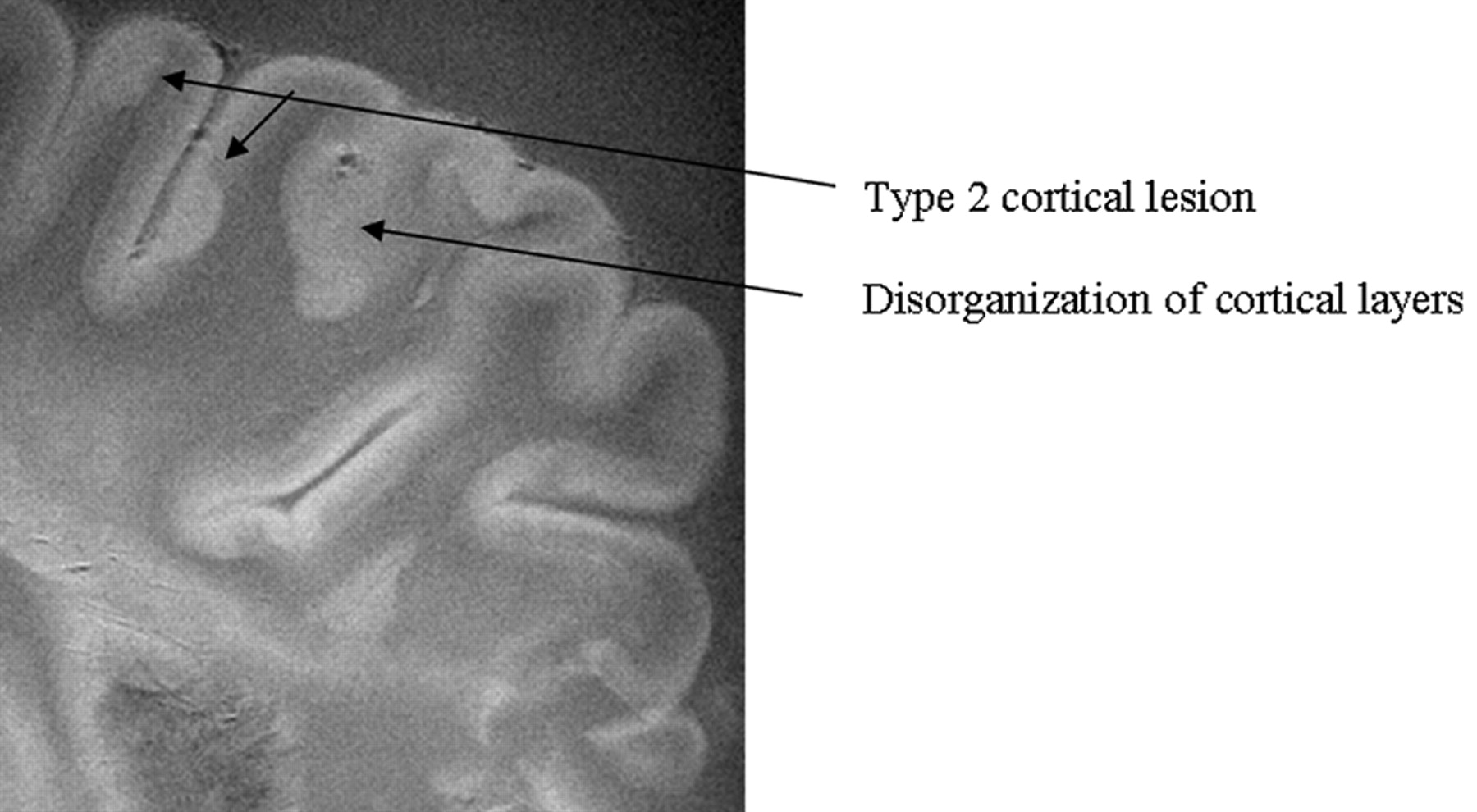
Image result for cortical MS 

I just read an article about the inimitable Terry Jones of Monty Python fame and how he has developed frontal lobe dementia. The symptoms sounded familiar - loss of impulse control, depression, aphasia or dislike of talking, 

"Unlike Alzheimer’s, there is no loss of reasoning or orientation. However, planning, decision making and speech are affected, and patients often seem less caring or concerned about their family and friends." https://www.theguardian.com/society/2017/apr/16/monty-python-terry-jones-learning-to-live-with-dementia

Hmm. I thought. I know I have some frontal lobe lesions. I wonder if there's a link between MS and frontal lobe dementia?

Turns out there is, and not only that but they are suggesting some of the people who appear with just depression or dementia may in fact also have MS. Often there's a long course of depression before the diagnosis of MS is made, but then we all know about how long it takes to be diagnosed unless you become paralyzed or blind suddenly...In any case, it's important to know about this as these people's dementia may be slowed with MS treatments.Here's one of the articles I found: 

Cognitive presentation of Multiple Sclerosis: Evidence for a Cortical Variant

In this study, an argument is made for the cortical variant of MS, one that wouldn't be detected by the old EDSS score, one that shows up purely cognitively until quite a ways down the MS trail and sometimes doesn't show physical effects even then. Cortical MS is difficult to find on MRI as the cortex isn't as springy in the MRI and lesions are harder to spot. Hmm. Mine showed up. How big are they anyway? Eeks.

"Although once considered uncommon or late features, cognitive and neuropsychiatric symptoms are now well recognised as early manifestations of multiple sclerosis.1–5 Estimates vary but Lyon-Caen and colleagues reported that 85% of patients with clinically definite multiple sclerosis of less than two years' duration, and 66% of those with only optic neuritis, showed some form of cognitive impairment.6 Similarly, Swingler and Compston7 reported a prevalence of 40% for neuropsychiatric symptoms and signs in 301 patients with established multiple sclerosis during routine clinical interview. Others have since confirmed this observation and reported that the prevalence of symptoms such as memory deficit or depression and focal cortical syndromes was as high as 60%.3–5 "


So, ho ho, I think. Perhaps it's a good thing I keep saving for that home. I may not need it for motoring around, but I may need it for dementia.

My friend and I were joking about how we can't remember things from one computer screen to another - we see something on one window we want to bring to another and then we forget entirely what it was in the millisecond it takes to change pages. 

I started this blog entry from wanting to work on my book; opened my email, saw the entry about Terry Jones, went hunting through research, wrote this and here it is some hours later and no work done on my book.

It is most frustrating. And most annoying, I opened my computer first of all for something that I still can't remember!

At a recent writer's retreat, one of the faculty told us she keeps a blank pad of paper beside her computer and jots down everything she wants to remember. I've gotta start doing that.

Meanwhile, I simply tell people an adaptation of Spike Milligan's poem, There are Holes in the Sky:

There are holes in my brain 
Where the thoughts flow out
If I seem confused
It's cos they're all about...

Image result for holes in brain

April 15, 2017

Whatever do you mean?


Ah yes. MS and relationships. I'm working on a book about how to liven up your intimate relationships even with MS and the research is mind-blowing. Well, it can be fun, too, but I digress...


Like, for example - did you know that one of the cognitive changes that comes with MS is the gradually increasing social disorder of not being able to read other's emotions/faces, and not being able to express our own?

What may be overlooked in relating to and caring for patients with multiple sclerosis is the fact that the neurodegenerative disease sometimes affects a person’s ability to properly convey and perceive emotion. According to the National Multiple Sclerosis Society (NMSS), while there is not enough conclusive evidence to suggest the disease directly affects emotion, it is important to consider that MS patients may either be struggling to cope with the disease, or are physiologically affected by it, making perception and expression beyond their control.
Aside from the loss of the ability to recognize the appropriate emotion behind certain expressions, a new study from the International School of Advanced Studies (Scuola Internazionale Superiore di Studi Avanzati or SISSA) in Italy now suggests MS patients have an increased difficulty interpreting emotions expressed through one’s posture, countenance, and comportment. Additionally, the study suggests these issues are caused by the patient’s inability to identify his or her own emotions, which is a phenomenon termed as alexithymia, and is observed in some MS patients.”⁠1 (Emphasis mine)


1 http://multiplesclerosisnewstoday.com/2014/11/12/inability-to-recognize-and-convey-emotion-an-effect-of-ms/ Accessed Mar 30, 2016

Alexithymia. A new multi-syllabic word to whisper in our partner's ear, late at night.

"I'm so sorry, darling, I didn't realize you were upset. You see, I have alexithymia..."
Related image
I'm so sure that will be the curative word...relationship fixed. "Oh, I see, you can't express or understand expressed emotion. So how SHOULD I reach you? Flash cards?"


Maybe flash cards or one of those "Daily Mood" flipcharts would be a good idea if only to help identify our feelings to ourselves. Because, apparently we can lose that, too.

Definition: Alexithymia

Alexithymia is defined as a personality construct characterized by the sub-clinical inability to identify and describe emotions in the self. The core characteristics of alexithymia are marked dysfunction in emotional awareness, social attachment, and interpersonal relating. Furthermore, individuals suffering from alexithymia also have difficulty in distinguishing and appreciating the emotions of others, which is thought to lead to un-empathic and ineffective emotional responding...
The treatment options for alexithymia are often times very different from typical counseling or talk therapy. For people living with alexithymia, a mental health professional will often concentrate on building a foundation of naming emotions and appreciating a range of feelings. The process will likely include both consideration of the experiences of other people and self-reflection. Even though some people with this emotional comprehension might sound very basic to others, for a person with alexithymia the process of growing their emotional intelligence and capacity may be difficult. Things such as:
  • Group therapy
  • Daily journaling
  • Skill-based therapy
  • Engaging in the creative arts
  • Various relaxation techniques
  • Reading emotional books or stories
  • https://www.disabled-world.com/health/neurology/alexithymia.php, accessed April 2017
Image result for i'm angry with you
Brain injury changes us, no matter how it is caused. The brain injury that comes with MS evolves daily and is still being understood. For the people around us, our emotional winds can blow a bit strongly. And for us, the hurt that we may inadvertently cause adds to our isolation, something all people with chronic disease suffer.

I seriously dislike the word challenge - it seems to mean we can overcome whatever it is. I haven't heard of too many people who overcame brain damage. I think in this case, we could call it a botheration. Annoying, non-fatal, often not big enough to kill us, but certainly big enough to maim some of our closest relationships.

 I suppose it all comes down to communication, understanding, and a fair dose of tolerance. Knowing about it helps. Reading about this was for me a revelation, a light of understanding why I hesitate so much to connect with people, why friendships remain distant, why I can move away from places without a backward glance. My brain doesn't notice the disconnect.

Mind you, I keep hoping I can dig my way out of this particular brain black hole and find a way to care and express my caring. And perhaps, someone like this:

Image result for i'm angry with you

March 28, 2017

Livin' large in a small body


As I near my 60th birthday, I have to admit, I've always been the tiniest bit chicken about things. Travelling, sleeping alone in the dark, being made fun of.

Not that I don't have reasons for all that - I blame the Catholics for my fear of the dark, my small town life for the travelling thing, and being made fun of for being made fun of. At 5' tall on a big hair day, I've been up for my fair amount of abuse. Add smart and nerdy and dressed in what one of my high school friends gently referred to "slightly out of style" clothing, I stood out.

A long haired dark horse standing in snow covered grass with mountains in the backgroundHeck, I've got a scar from playing my clarinet in band. Who gets that?

Anyway, through the mystical bath of being abandoned in my marriage, being moved all over the world, sleeping alone a lot, I've gotten braver. I think. I've lived alone for most of 8 years now, and it's okay. I've moved away from family, and it's okay. I've run for office, and that's okay, too.

In all of these things, I "whistle a happy tune"... and I throw myself in. Pretending not to be afraid does seem to get me past most things.

The MS thing has thrown a bit of a wrench into my plans. See, I can pretend to be brave, only to have my body crap out on me at the moment when I most need it. It is frustrating. I am still at the point of refusing to allow it to be in charge, but I am finding it makes sense to take it into consideration.

So living large is developing smaller parameters. I fall asleep easily, so long solo drives (which I loved) are out. Long solo walks likewise. Legs simply aren't reliable, though I push them as hard as I can. Hanging out late at night in noisy places knocks me out for days. Noise itself is enough to overwhelm my senses. I can't have massages because it overwhelms my body. Too much sensation at once.

But no, I protest! I can't be done yet!!

Image result for iceland

So next week I'm off to ICELAND for the Iceland Writers Retreat that sounds like a pile of two transatlantic flights wrapped around a filling of all sorts of activities, cerebral and physical. I'll even have to be social, attempt to be witty, intelligent, knowledgeable and yet receptive to learning. The whole thing seems like a huge challenge for cognitively-impaired old me. What if I get lost? It's not a completely inappropriate fear - I get lost all the time.

Last week I had a huge anxiety attack about doing this all on my own, but I've met online a bunch of fellow Canadians going to the same event on the same plane so I feel supported a bit. I'm just hoping against hope that my body works with me. I'm telling it, "one more time into the breach, my friend..."

My son says I keep using my MS as an excuse for taking exotic trips. It's true. MS makes me feel like I'm on a merry-go-round, not knowing where I will end up. I may have a long ride, or I may stop on the next round. No one can tell me.

Despite my fear and pending bankruptcy (kidding), I'm off for this trip, hoping I can grab a few of the golden rings as I do. Northern Lights? Icelandic horses? Volcanoes? The most literate society in Europe? Icelanders, such interesting people, living in the middle of the harsh northern ocean. To say nothing of all of the authors I'll meet. Wow.


Meanwhile, my body mutters. It mumbles. It takes a moment now and again to remind me that all is not as it should be.

Ah well, whistle a happy tune, and off I go!


May 14, 2016

So, how does it feel for those of you who have to deal with a partner with MS?

I'm hard at work on a book about MS and intimate relationships. It's been an interesting process.
I've been to our excellent local sex shop, Venus Envy Halifax, and interviewed the funny, smart and wonderful Kayleigh Trace, who provides sex education through the shop and advocacy everywhere.
I've wandered the aisles of hardware stores, looking for things shy men could pick up to spice up their sex lives. I've done the same at Dollar stores and pet stores, I've cruised so many websites, looking at furniture and various equipment and ideas and such.

I have to say I have NOT gone to porn sites. I personally find porn boring and degrading, so I asked someone else to do that research for me. He's got a background in that stuff, so can judge better. I always find myself wincing or giggling.

I've read every sex and intimacy related book in the Halifax Library system. There are a lot. My favourite is A Tired Woman's Guide to Passionate Sex, by Laurie Mintz, because even the title sounds right.

I've done the same with MS related books. Fewer of them, and more focused on things like taking meds to control pee, or helpful advice like "Talk to your partner". Oh, and full of grim info on what can happen with MS and such as it progresses. Not cheery reading for me.

I even started a survey on Survey monkey about what people wanted to know, about challenges they had, etc. Belatedly, I added a second survey for partners, because I want to know what they want, too. Being as how good relationships often require partners....

But I need more responses. I've had over 100 responses to the MS-ers survey, and I would love to have more to the partner's half. Could I ask you to circulate this to your contacts and partners?

Partner survey

Oh, and another question - regarding illustrations. I don't have the budget to hire actors to pose in sexual positions for me, and trust me you don't want me in the book, so I was going to either use:

a. Wooden dolls
b. Needle felted dolls

to show positioning. What do you think? All comments welcome.
Here's one of my needle felted dolls (dressed) for perspective:


May 10, 2016

So, if you're crazy, how do you know?

Just came from a very non-rewarding visit to my MD. I battle depression as a part of my MS and it is really screwing with my good time lately. Could it be the fresh lesions on my brain despite my DMT? Or various family issues? Or my being financially tight and chubby and getting older? Or maybe the visit with my neurologist where he told me that yes, I was actually having new symptoms that affect my hands (AAUGH!) and eyes (DOUBLE AAUGH!)? Serious enough that he ordered a repeat MRI for me and I only had one six months ago. (unusual here in the hinterland). Who knows?

Or maybe my MS is just attacking my emotional centre as well. It'll do that.

Anyway, my doc is of course asking me what my problem is. "Don't you feel you have value?"

Um, not if I'm not contributing, no.

"So are you saying people in wheelchairs don't have value?"

Of course not. They all have their own value. It is MINE that isn't there....

It's nonsensical, but then those are the blinders depression puts on a gal. I can't even argue it anymore. My therapist is trying to convince me I have value in just existing, but hell, I'm not buying it. Funny thing is, I know others who just exist and I love them dearly and never ever think they should go tumble off this field of tears, but me, yep, the thought of not being here to deal with it all again and again and again is tempting.

See, it's all cyclical, and I don't even have periods anymore. I sink down into depression, I wallow, something jolts my battery (usually something/someone new) and I rumble to life again, but the battery light is still flashing on and off in a warning sort of way. I don't think I've ever had it go out completely since I was diagnosed, and I am getting SO TIRED OF MYSELF.

Fortunately, I only live with a cat, so the damage I inflict with my depression on others is necessarily limited to a few guilt-inducing emails now and then. My cat is an older fellow, declawed and neutered, so he can identify with my anomie. For a while he lived with my birds and was told not to pounce them. He's happier now that he has my permission to eat any moving small creature we come across, especially spiders.

I know exercise, music, sex, good food, cheese, and girly drinks all help. But when I'm depressed, I can't make myself reach for those things. I simply wallow. Surprisingly, the other day, I actually cried. Haven't done that in years.

Hate crying as I go all blotchy and red when I do and I develop a terrible headache. So then I feel awful about crying, which isn't helpful on the whole depression thing.

In any case, a lot of this is probably due to a MS flare-up so I know if I wait it out or do something, it will eventually pass. It's good to know that.

For any of you in my same mess, there's a pretty good book online about ms and depression 
symptoms, written by the same author who wrote "MS and your Feelings". Check them out, and get yourself some support. The one thing I've learned through all this is that it's your friends (and pets)who will see you through. Don't bother counting on family.


March 31, 2015

Oh the sweet sweet aching disappointment of MS

I had my arthritic knees replaced in December - both of them at the same time - to help me cope with the inevitable MS flare up post-op.
I didn't go through a slump, really, denied it totally. Put myself through physio and lots of exercises and trained myself to go up and downstairs despite the warnings from my legs that all was not nice in there. Foot spasms, calf spasms, aches in my thighs, rock hard muscles.
So, now, three months later, I fully expected to be fine. I worked so hard on my recovery, I foolishly thought that my MS would cooperate with me, help me along. I am walking straighter, faster, longer. But all is not well.
Instead my MS is thrashing me through pain and spasms every night, non-dependent on my activity level.
If one more person tells me I need to pace myself I will go mad. I've lived with this disease for ten years or more and have learned how to pace myself. I can't bear much more advice to "rest", "you're doing too much" etc.
With this disease, it is so easy to simply stop. I fight this every day. It's not good for me in any way to stop. It's better to do something.
But it is heartbreaking to think you are making progress (as with my knee replacements) only to realize you remain in the same place in the end...
Sigh.
Must go stretch...

February 25, 2015

Office spoons


There's a cute little analogy that goes around about how to pace yourself with MS. It for some reason equates your energy to spoons - every day you start off with the same number of spoons, and you use them up throughout the day - getting dressed is a spoon, making breakfast is a spoon, going to get groceries is five spoons, and so on. Once the spoons are gone, you have to wait til they come back.

So if you plan ahead, you can have your cake and eat it to, so to speak. You just make sure there are enough spoons left to do what you want in the day.

Aha. One problem. With MS, our drawerful of spoons is like the drawer of spoons in the office. You know, the one that one day can barely close because of all the spoons, and the next day has only one bent one in the corner, and for some reason, a pickle fork.

With MS, there's a secret someone taking away and adding spoons. So, though we may think we can do this and that when we wake up, we may go to the drawer and find our expectations have to dramatically change. We have to adapt, every day, to what we find in that drawer.

It's hard to explain this to people without MS (PWOMS). But most people understand about those office spoons.