I was at the pool today, swimming my laps in the attempt to forestall the onslaught of MS spasms. While I was there, I saw a fellow "one of us" arrive in a wheelchair, with a helper of some sort, a young lifeguard or physio or something. He spent time leading her around the pool, letting her kick her legs, stand with support, get her unwilling muscles moving.
And all the way around, she was charming him. Joking, smiling, trying to please him.
As we all do. We all tell people we're doing "just fine", we joke about the times we wobble over or burn pots or forget what we were saying or miss the point or have to struggle to walk. And if someone is with us, we try even harder, pulling our lips back, grinning and joking, trying to be charming so that our helpers will stay with us, look after us, enjoy our company.
It's a terrible responsibility, this need to be cheerful through the trials of chronic illness.
But we want company, assistance, friends, so we joke along, not revealing as much of ourselves as we need to to be truly understood in case those around us understand and leave us, alone, in the water, to flounder.

March 22, 2013


March 18, 2013
And once again CCSVI fails to prove itself...
It always blows my mind that people in favour of CCSVI say, "Follow the money" and blame big pharma - well, what about the docs who are making millions on this procedure?
Highlights mine...
Vein Surgery for MS Fails in First Controlled Trial
SAN DIEGO -- Outcomes in multiple sclerosis patients were not improved with a controversial surgical procedure -- percutaneous transluminal venous angioplasty -- to improve blood flow in cerebrospinal veins, results of a small, double-blind, controlled trial indicated.
Among nine patients who underwent the venoplasty to clear blockages, clinical outcomes and brain lesion measures were generally worse after 6 months than in the 10 patients who received a sham procedure, Adnan Siddiqui, MD, of the State University of New York at Buffalo, and colleagues found.
Patients in the active-treatment group had a total of four clinical MS relapses during follow-up, compared with one relapse in the control group. MRI lesion volumes and numbers also were no better and, for some measures, showed strong trends toward worsened disease activity in the patients undergoing venoplasty.
Data from the study were released in advance of Siddiqui's formal presentation next week at the American Academy of Neurology's annual meeting here.
The findings were especially notable because they represent the first report of a randomized, controlled, double-blind trial of the procedure -- and also because Siddiqui and co-principal investigator Robert Zivadinov, MD, also of the University at Buffalo, have been more accepting than most U.S. neurologists of the theory underlying the venoplasty procedure.
That theory goes under the name of "chronic cerebrospinal venous insufficiency" or CCSVI. It gained worldwide prominence in 2009 when Paolo Zamboni, MD, of the University of Ferrara in Italy, reported that every MS patient he examined showed blocked veins and reduced blood flow out of the brain, whereas none of the healthy controls showed such abnormalities.
Moreover, Zamboni asserted that venoplasty in his MS patients led to dramatic relief of symptoms, amounting to a virtual cure in many of them.
But attempts to replicate the findings of Zamboni's uncontrolled, unblinded study in other settings have often failed, with neurologists elsewhere reporting either that they found CCSVI only rarely in MS patients, and/or that it was no more common in MS patients than in controls.
In the largest CCSVI study to date, conducted in Italy and using blinded central interpretation of the ultrasound scans, only 3% of MS patients and a slightly smaller percentage of controls were found to have the condition. The finding led the Italian Multiple Sclerosis Society to declare CCSVI effectively nonexistent as a cause of MS.
Nevertheless, a small industry centered on the theory has flourished, especially in Latin America, where endovascular surgeons perform venoplasty on MS patients wealthy enough to afford it -- despite official recommendations from neurology groups that such procedures hold many risks and no proven benefits.
Zivadinov, in an interview with MedPage Today last year, said that patients should undergo the procedure only in the context of a clinical trial. That was also the message Siddiqui conveyed with the results of their team's current study.
"This is not the last word on this endovascular treatment for MS," Siddiqui said in a press release. "This is the first word because this was the first double-blinded, randomized, sham-controlled trial on the subject. However, these findings lead us to caution strongly against the general acceptance of this invasive procedure for MS patients."
In the study, called PREMISe (Prospective Randomized Endovascular Therapy in MS), an initial 10 patients underwent the venoplasty procedure as a phase I safety test, with no serious adverse events noted.
For the phase II efficacy trial, Siddiqui and colleagues recruited 20 patients to be randomized to the active procedure or to a sham in which patients were catheterized but no venoplasty was performed. Only the interventional surgeon -- not the investigators who evaluated outcomes -- was aware of treatment assignments.
Patients had received an initial diagnosis of CCSVI on the basis of imaging studies as well as confirmed MS of the active-relapsing, secondary progressive, or progressive-relapsing forms. Patients had EDSS disability scores of no more than 5.5.
After catheterization, all patients in both arms were confirmed by the investigators to have CCSVI using catheter venography to establish luminal diameter reductions of at least 50% in the azygous or internal jugular veins. Venography findings had to be confirmed with intravascular ultrasound.
One patient in the phase II study was found not to meet criteria for CCSVI during this procedure and was excluded, leaving 10 in the sham group and nine in the venoplasty group.
Mean EDSS scores were 3.9 in the phase II patients, with median disease duration of 9 years (range 2 to 31). Mean age at disease onset was 35; at enrollment, mean age was 46.
Besides relapses, Siddiqui and colleagues examined other clinical outcomes including EDSS score, 6-minute walk distances, and Multiple Sclerosis Functional Composite score.
None of these measures changed significantly from baseline in either group, and there were no between-group differences, the researchers indicated.
In addition to the lack of apparent clinical improvement in patients undergoing the procedure relative to controls, there was no sign that the venoplasty improved blood flow.
Both groups showed increases in venous sufficiency from baseline, according to the researchers' hemodynamic measurements, but they were virtually the same (P=0.894)
MRI measures also did not favour the venoplasty group:
- Mean cumulative new T2 lesions: 0.3 sham, 2.2 venoplasty (P=0.07)
- Mean T2 lesion volume change: -4.7% sham, 13.9% venoplasty (P=0.04)
- Mean cumulative T1 lesions: 0.2 sham, 0.8 venoplasty (P=0.14)
- Mean T1 lesion volume change: -14.6% sham, -10.2% venoplasty (P=0.81)
- Mean cumulative contrast-enhancing lesions: 0.3 sham, 2.4 venoplasty (P=0.06)
One serious adverse event was seen during the randomized phase, but Siddiqui and colleagues determined that it was not treatment-related: a cardiac event treated with a pacemaker.
A single case of swelling and soreness in the neck was considered treatment-related. However, it was rated nonserious as it did not require additional treatment, the researchers indicated.
"Our strong recommendation to patients and to practitioners, who have, in earnest, been seeking betterment for their disease and a cure for MS is that they should instead consider enrolling in trials, rather than undergoing these procedures on a fee-for-service basis," Siddiqui said in the press release.
The study was funded by Kaleida Health, the Direct MS Foundation (Canada), Volcano, ev3 , Codman & Shurtleff, the Jacquemin Foundation, and individuals.
Siddiqui reported relationships with Hotspur, Intratech Medical, Stimsox, Valor, Concentric, ev3/Covidien, GuidePoint, Penumbra, Genentech, Abbott, and Neocure. Other study investigators reported relationships with Teva, Biogen Idec, EMD Serono, Bayer, Genzyme-Sanofi, Novartis, Bracco, Questcor, Shire, Novartis, Actelion, Allergan, Nelezza, Pfizer, St. Jude Medical, Toshiba, Boston Scientific, Cordis, Micrus, W.L. Gore, and numerous other drug and device companies.
Siddiqui reported relationships with Hotspur, Intratech Medical, Stimsox, Valor, Concentric, ev3/Covidien, GuidePoint, Penumbra, Genentech, Abbott, and Neocure. Other study investigators reported relationships with Teva, Biogen Idec, EMD Serono, Bayer, Genzyme-Sanofi, Novartis, Bracco, Questcor, Shire, Novartis, Actelion, Allergan, Nelezza, Pfizer, St. Jude Medical, Toshiba, Boston Scientific, Cordis, Micrus, W.L. Gore, and numerous other drug and device companies.
Primary source: American Academy of Neurology
Source reference:
Siddiqui A, et al "Percutaneous transluminal venous angioplasty (PTVA) is ineffective in correcting chronic cerebrospinal venous insufficiency (CCSVI) and may increase multiple sclerosis (MS) disease activity in the short term: Safety and efficacy results of the 6–month, double–blinded, sham–controlled, prospective, randomized endovascular therapy in MS (PREMiSe) Trial" AAN 2013; Abstract P04.273.
Source reference:
Siddiqui A, et al "Percutaneous transluminal venous angioplasty (PTVA) is ineffective in correcting chronic cerebrospinal venous insufficiency (CCSVI) and may increase multiple sclerosis (MS) disease activity in the short term: Safety and efficacy results of the 6–month, double–blinded, sham–controlled, prospective, randomized endovascular therapy in MS (PREMiSe) Trial" AAN 2013; Abstract P04.273.
March 9, 2013
Scarfolk Council: The 'Inoc-uous' vaccination machine
Scarfolk Council: The 'Inoc-uous' vaccination machine: Scarfolk primary school installed one of these Inoc-uous devices in the basement in 1974. The entire school's pupils queued up for their...
Maybe this would help with those pesky injections?
Maybe this would help with those pesky injections?
February 3, 2013
Androgenic hormones could help treat multiple sclerosis, study suggests
Androgenic hormones could help treat multiple sclerosis, study suggests
Great. Here I've been fighting an ongoing battle with facial hair, and now it seems it's a good thing to have rampant testosterone. Might explain the relatively quiescent progress of my MS, my muscles that are unfemininely large, and my ZZTop beard.
Sigh.
Back to my nightmare of being old and unshaven in a home...though I figure I could at least be cool....
ZZ Top Under Pressure
Great. Here I've been fighting an ongoing battle with facial hair, and now it seems it's a good thing to have rampant testosterone. Might explain the relatively quiescent progress of my MS, my muscles that are unfemininely large, and my ZZTop beard.
Sigh.
Back to my nightmare of being old and unshaven in a home...though I figure I could at least be cool....
ZZ Top Under Pressure
January 22, 2013
Impaired social cognition in multiple sclerosis
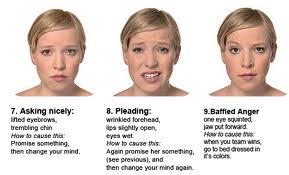
Oh goodie.
As if it weren't enough that our bodies turn on us and make us dependent, and our minds lose things and start storing socks in the freezer and ice cream in the hall cupboard, it appears that we lose the ability to interact appropriately with the people around us, often the very people we need to keep us from falling apart.
This study looked at how people with MS responded to a film of four people sitting around a dinner table having a discussion. At various points in the movie, it is stopped and the patient is asked to identify the emotion being expressed by the person at the table.
Apparently we don't do so well at that.
Like autistic people...we seem to lose the ability to read people's faces appropriately, which might account for a few mixed experiences I've had lately.
Of course, this study also gives us an excuse for misunderstanding people. We can just trot out the statement, "Remember - we MSers fail the MASC! You have to tell me what you are thinking!"
Finally, a reason to have real discussions, instead of being expected to read minds.

Huzzah!
January 14, 2013
"Sticks! Sticks!"
I just came back from five days in Havana Cuba. I'd gone down with my kids with the idea that they could help me muddle through the city, push me in a wheelchair if needs be, do all that stuff.
They were immeasurably helpful, and I'm grateful they were with me, given the potent mix of fatigue, sun and rum that was coursing through my veins (with a few prescribed medications that were labelled firmly 'do not take with alcohol!') Suffice to say my liver is having a pleasant little detox right now.
One of the best things I did was bring my Nordik Poles with me. I used them for balance and to give me a little push at the end of the day when walking was too hard. Or in the middle of the day, ditto.
My bearded boys, one son's gorgeous red headed girlfriend, and little ol' grey-haired me with my sticks made quite an entourage as we walked through the old town. Handsome Cuban men called out to us - "Hey, Gringa! Sticks!" as I wandered by.
I think they thought I was on some sort of mad fitness regime, taking ski poles through Havana.
Still, they worked very well, and I recommend them highly.
The wheelchair less so - the cobblestone and damaged roads in Havana would likely have vibrated my fillings out as I went by, or put my spinal column into shock.
My sticks and I, though, we made it.
 Then I came home and slept for a week. But at least I'd seen Havana.
They were immeasurably helpful, and I'm grateful they were with me, given the potent mix of fatigue, sun and rum that was coursing through my veins (with a few prescribed medications that were labelled firmly 'do not take with alcohol!') Suffice to say my liver is having a pleasant little detox right now.
One of the best things I did was bring my Nordik Poles with me. I used them for balance and to give me a little push at the end of the day when walking was too hard. Or in the middle of the day, ditto.
My bearded boys, one son's gorgeous red headed girlfriend, and little ol' grey-haired me with my sticks made quite an entourage as we walked through the old town. Handsome Cuban men called out to us - "Hey, Gringa! Sticks!" as I wandered by.
I think they thought I was on some sort of mad fitness regime, taking ski poles through Havana.
Still, they worked very well, and I recommend them highly.
The wheelchair less so - the cobblestone and damaged roads in Havana would likely have vibrated my fillings out as I went by, or put my spinal column into shock.
My sticks and I, though, we made it.

January 9, 2013
Being a bad patient

But around the MS thing, I do try and be a good patient.
Because I worked in primary care, and I know well how bad patients get treated. Non-compliant patients get treated like scum. No one asks if the patient had good reasons for not taking the prescribed medication - or if anyone ever asked him. No one likes the patient who misses appointments (in primary care in Ontario, three such misses without good explanation meant you got dropped off the doctor's list. But who determines if the explanation is good?)
Patients who argue with their doctors get branded with the "personality disorder" moniker and then get pushed to the bottom of the list.
So, as a nurse, I've always tried to be endlessly polite and then do my hollering AFTER I got off the phone. I take my medications (mostly) like a good girl, and try to be responsible about self-care.
Today I nearly lost it, though.
I was booked for a pelvic ultrasound for this morning at 9:50. They told me to show up 15 minutes early, but I'm wise and didn't. I drank water on the way so I wouldn't be frantic with the need to pee. I'm not pregnant but I suspect looming fibroids and my MS has tinkered with my bladder sensation and control.
I walked through the maze of the local children's hospital, where I sat and waited for my number to be called. It was. At that point I was able to register. I went back and sat down. And waited.
I was surrounded by pregnant women, alternately breathing and crossing their legs. If you've never been pregnant, you can't possibly appreciate what it's like to wait for a pelvic ultrasound. You are nervous, want to see the baby, and the same baby is tapdancing on your filled bladder.

With my middle child, I was so full by the time they took me, they told me I had placenta previa - when really I had too much pee in my bladder.
So I was sending soothing and understanding glances at the pregnant woman while gradually getting more and more uncomfortable myself, as the HOURS passed.
Eventually - a full hour + after my appointment and with three more people to go before I could be seen - I couldn't bear it any longer. I went to the desk and politely told the lass that I had to go (in both senses of the word). She whispered she'd try to rebook me. Much was made of the fact that I'd already registered - perhaps that gets fed back to some assessment?
Anyway, my rebooked appointment is at the end of APRIL. In four months. Surely to God they had an opening before then. Not that I'm in any hurry to recreate this experience.
You can't tell me that wasn't punishment for me leaving.
And now I'm mad.
Subscribe to:
Posts (Atom)